

Autistic-Like: Graham's Story
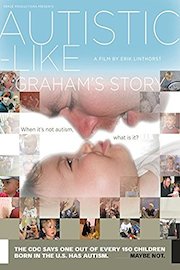
Autistic-Like: Graham's Story
 8.3/10
Where to Watch Autistic-Like: Graham's Story

"Autistic-Like: Graham's Story" is an enlightening and compassionate documentary film that brings together the realms of personal journey, medical research, and parental advocacy. This 2008 production is an incredibly absorbing film that serves to enlighten the viewer about the complexities and subtleties of diagnosing and treating learning disorders, focusing on children who exhibit autism-like symptoms but don't meet autism's diagnostic criteria.
At the heart of the film lies the story of Graham, a young boy who defied the textbook definition of autism, but who showed clear autistic-like symptoms. These included social withdrawal, communicating challenges, and sensory processing difficulties. Directed by Graham's father, Erik Linthorst – an acclaimed Hollywood screenwriter – the film chronicles the intense journey undertaken by Linthorst and his wife as they strive to understand their son's condition and secure the appropriate guidance and treatment.
Linthorst's clear filmmaker's eye managed to document the story in a sensitive and captivating manner, offering an honest and profound lens into the lives of those facing similar scenarios, as well as bringing viewers closer to the family's heart-breaking struggle and hope-filled resolution.
As seen through the eyes of the parents, Graham's story treads the path of an inscrutable maze of uncertainties and hopes. He was initially misdiagnosed with autism which led to his parents seeking out treatments that weren't entirely appropriate for his condition. But as the narrative unfolds, we see them tirelessly reaching out to a plethora of experts, exploring a myriad of treatments, and advocating for their child in a system that seems designed more for categorization than for understanding individual differences.
In addition to presenting this personal journey, "Autistic-Like: Graham's Story" also includes interviews and expert insights from prominent professionals in the field. There is a shared acknowledgment among these experts that autism, as currently defined, does not encompass all children who have autism-like symptoms. This leaves children like Graham in a kind of no-man's-land – not quite fitting into any specific diagnostic box, but clearly needing specific and specialized help.
Perhaps, what sets "Autistic-Like: Graham's Story" distinct from other films on the subject is its direct address to the greater challenges with the received diagnostic mechanisms for learning and social interaction disorders. It brings to light the larger issue at play—the gaps in our knowledge and approach to treating spectrum disorders. The film underlines the urgent need for reconsidering the way these disorders are understood, diagnosed, and classified by medical professionals and society at large.
The vivid portrayal of this family's quest for appropriate help and guidance serves as an empowering message to countless parents finding themselves in similar situations. It demonstrates the determination that families may need to muster in fighting for their child’s individual needs. This becomes especially important when their child’s condition does not fit neatly within the understandably simplistic categories the medical industry uses for classification.
Despite its serious subject matter, the film does not rely only on the pathos of the story. It also focuses on providing practical guideposts and resources to help other families navigate the labyrinthine process of obtaining the correct diagnosis and most effective treatments for their children. While the film’s sobering reality check on our understanding of spectrum disorders can be disconcerting, it carries an undeniably uplifting undercurrent—a testament to love, resilience, and an unrelenting quest for understanding.
"Autistic-Like: Graham's Story" is more than a film about one particular child's journey or a single family's struggle. It's a detailed exploration of the vital need for medical professionals, educators, and society as a whole to take a broader, more flexible approach in recognising and addressing the unique challenges faced by each individual child. It is an open call for change, for compassionate understanding, for recognising the individual needs of children who may not fit neatly into existing diagnostic frameworks. Through the intimate lens of a family’s journey, it presents a much-needed dialogue about the spectrum of human differences and how we understand, accept, and nurture them.
8.3/10