

At Home: Sto Spiti
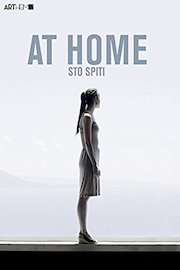
At Home: Sto Spiti

Where to Watch At Home: Sto Spiti

At Home: Sto Spiti is a gripping Greek drama film that not only tests the limits of societal norms and individual conscience but also shines a light on the pressing issues of immigration, economic crisis, and human rights. The film features talented Greek actors Maria Kallimani and Alexandros Logothetis and is directed by Athanasios Karanikolas.
The story revolves around Nadja, an immigrant domestic worker from Georgia, portrayed by Maria Kallimani who has been in the service of a well-off Greek family for many years. Intelligent, devoted, and hardened by life's trials, Nadja is not just a silent witness to the family's daily life but she is an intrinsic part of it. Alexandros Logothetis plays the character of the family's patriarch, a businessman hit by the economic crisis and driven by an unquenchable need to maintain his family’s affluent lifestyle.
Delving into themes of privilege, entitlement, and humanity, 'At Home: Sto Spiti' captures the dynamics of this household where Nadja serves. She cares for the family and their luxurious home while adapting to her employers' whims and demands. She is emotionally connected to her employers, especially the children she has cared for, and is respected and loved in return.
However, when Nadja becomes unwell, the attitude of the family she has devoted her life to serve significantly changes, which forms the crux of the story. The facade of empathy and concern vanishes as their comfort and the pristine appearance of their household are at stake. The family who had once welcomed her as their own starts plotting to replace her and this sudden shift in their behavior leaves Nadja, as well as the audience in shock.
Nadja's illness serves as a backdrop for the director to expose the veil of superficiality that covers the reality of human relationships when tested by hardship. It portrays the paradox of Nadja's life as she is integral to the family's functioning, yet her existence and welfare become secondary when her ability to serve is compromised. The movie subtly criticizes the mentality that reduces human worth to their economic contribution and usefulness.
Maria Kallimani’s powerful performance as Nadja is the driving force behind this movie. Her subtle expressions and quiet resilience beautifully captures the plight of a person who is at the mercy of others, despite having cared so much for them. Her ability to make the audience feel her pain, turmoil and indignation while maintaining the decorum of her position is commendable.
Logothetis’s portrayal of the businessman dependent on the functionality that Nadja provides, and his eventual transition from a benevolent employer to a selfish individual dealing with his own downfall, is brilliantly delivered. His character is indicative of society's typical response when convenience outweighs compassion.
'At Home: Sto Spiti', whilst being a poignant tale of an immigrant's predicament, is an incisive commentary on the wider socio-economic realities of modern society. The movie brilliantly represents the countless immigrants and laborers worldwide who seek work far from their homeland in hopes for a better future.
Athanasios Karanikolas beautifully crafts this movie using minimal dialogues and slow-paced storytelling, enhancing the impact of the narrative. He outstandingly visualizes the human tendency to discard the 'unnecessary' without guilt using the realm of a household and extends it to the larger world, which is a reflection of the same sentiment.
Underneath its beautiful cinematography and gripping performances, 'At Home: Sto Spiti' is an examination of humanity and social disparities that persist in our society. The film successfully makes the viewer empathize with the plight of the marginalized and question the stark differences of their own lives. The movie challenges its viewers to rethink societal norms, making it an essential viewing for those seeking socially relevant cinema.