

Ancient Greek Civilization Lecture 1 of 10 The Minoan Thalassocracy.
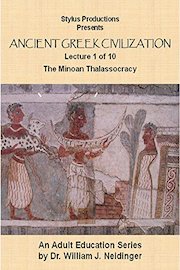
Ancient Greek Civilization Lecture 1 of 10 The Minoan Thalassocracy.

Where to Watch Ancient Greek Civilization Lecture 1 of 10 The Minoan Thalassocracy.

In the first installment of a captivating ten-part series, Ancient Greek Civilization Lecture 1 of 10 The Minoan Thalassocracy, renowned historian and lecturer Dr. William J. Neidinger takes viewers on an intellectual journey into the heart of one of the most fascinating and enigmatic cultures of the ancient world: the Minoans. This lecture provides a meticulously detailed exploration of the Minoan civilization, which thrived on the island of Crete during the Aegean Bronze Age, a period that laid the groundwork for future Greek cultures and their extensive maritime endeavors.
Dr. Neidinger is a masterful storyteller, adept at weaving together the threads of archaeology, mythology, and historical analysis to bring the past to life. In the opening lecture, viewers are introduced to the Minoan Thalassocracy, an extraordinary maritime empire that dominated the Aegean and eastern Mediterranean seas from approximately 3000 to 1450 BCE. The term "thalassocracy" refers to a state or empire based primarily on naval supremacy and trade, a fitting description for this civilization that established extensive trade networks and cultural exchanges with neighboring lands.
With his engaging presentation style, Dr. Neidinger delves into the origins and development of the Minoan civilization, discussing the island's geographical significance as a crossroads for traders and explorers. The fertile lands of Crete, combined with its strategic location, allowed the Minoans to harness the resources of the surrounding sea, leading to a thriving society that excelled in trade, art, and architecture.
The lecture features stunning visuals that illustrate the grandeur of Minoan architecture, most notably the Palace of Knossos, which is often cited as the architectural centerpiece of Minoan civilization. Dr. Neidinger discusses the palace's complex layout, with its intricate frescoes, advanced plumbing systems, and sprawling courtyards. This exploration of Minoan architecture highlights their sophistication and innovative design, which would later influence Greek architectural styles.
Dr. Neidinger also places significant emphasis on the Minoans' artistic achievements, including their vibrant pottery, frescoes depicting lively scenes of nature and bull-leaping, and exquisite metalwork. These art forms reveal much about Minoan society, from religious practices to social customs. The lecturer analyzes the meaning and symbolism behind various artifacts, encouraging viewers to consider how art functions as a historical narrative and what it reveals about the people who created it.
A vital aspect of the Minoan Thalassocracy addressed in this lecture is its extensive trade networks. Dr. Neidinger explains how the Minoans established connections with various civilizations, including the Egyptians and Mesopotamians, facilitating not merely the exchange of goods but also cultural ideas and influences. The value of trade in shaping Minoan society is underscored, as well as the implications of their maritime prowess for the subsequent development of Greek civilization.
As the narrative unfolds, Dr. Neidinger navigates through the complexities of Minoan society, touching upon its political organization, religious beliefs, and social structures. He posits that the Minoans likely practiced a matriarchal society, a significant deviation from the patriarchal norms that would later characterize classical Greek civilizations. This exploration of gender roles within Minoan culture invites viewers to ponder the diversity of ancient societies and the various ways they structured their worlds.
An intriguing aspect of the Minoan civilization is its enigmatic nature, particularly regarding the sudden decline of this powerful empire. While this first lecture does not aim to answer all the questions surrounding this historical mystery, it sets the stage for the following installments. Dr. Neidinger raises intriguing theories and hypotheses concerning possible factors for this decline, such as natural disasters, invasions, or economic collapse, encouraging viewers to contemplate the fragility of civilizations and the lessons they may impart.
Throughout the lecture, Dr. Neidinger maintains an interactive approach, frequently engaging with the audience, inviting questions, and prompting thoughtful discussions. This pedagogical style not only enhances the learning experience for viewers but also encourages them to reflect critically on the historical narratives presented.
In addition to educational value, Ancient Greek Civilization Lecture 1 of 10 The Minoan Thalassocracy offers a rich visual and auditory experience, making it accessible to both scholars and casual viewers alike. The use of graphics, maps, and photographs of archaeological sites and artifacts enriches the lecture, creating an immersive experience that captivates the audience's imagination.
By the end of this first lecture, viewers are not only equipped with foundational knowledge about the Minoan civilization and its maritime empire but are also inspired to delve deeper into the complexities of ancient Greek history. As Dr. Neidinger prepares to transition to the subsequent lectures, he leaves the audience with a sense of wonder and anticipation for the explorations ahead, establishing a solid groundwork for the series to unfold. The Minoan Thalassocracy is not just a study of an ancient civilization—it serves as a poignant reminder of the interconnectedness of human cultures throughout history.