

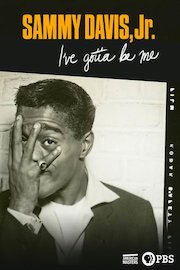
American Masters: Sammy Davis Jr.: I've Gotta Be Me
American Masters: Sammy Davis Jr.: I've Gotta Be Me

Where to Watch American Masters: Sammy Davis Jr.: I've Gotta Be Me

American Masters: Sammy Davis Jr.: I've Gotta Be Me is an intimate, captivating, and mesmerizing documentary film, focusing on the life, career, and legacy of the multitalented Sammy Davis Jr. Directed by the notable documentarian Sam Pollard and released in 2017, the film boasts an impressive ensemble cast, with on-camera interviews from illustrious personalities including Billy Crystal, Norman Lear, Jerry Lewis, Whoopi Goldberg, Kim Novak, Quincy Jones, and Todd Boyd.
The heart of the film lies in its honesty and transparency, as it attempts to objectively explore the complexities and contradictions of Sammy Davis Jr.'s life. A child prodigy, soldier, actor, singer, and dancer, he was known as 'Mr. Show Business', admired and loved by many. Yet, his life was far from smooth, marked by racial bias, controversies and personal issues. Sammy Davis Jr was an individual who wore several hats, and this documentary explores each facet of his life, allowing viewers a glimpse into the man behind the entertainer.
Billy Crystal, Whoopi Goldberg, and Jerry Lewis provide touching and poignant anecdotes about Sammy Davis Jr. Their personal stories about working and interacting with Davis supplement the narrative with heartfelt moments. Crystal's accounts as a longtime fan, Goldberg's reflections as an Afro-American actress, and Lewis's stories from the glory days of Rat Pack, all help to paint a holistic portrait of Davis that goes beyond his public persona.
A standout feature of the film is indeed the dedicated contribution from the entertainment maestro himself, Quincy Jones, as his long-standing friendship with Davis and his iconic stature in the industry allows him to share unrivaled insights. Norman Lear, the legendary television producer, offers valuable viewpoints on Davis's multi-faceted personality, including his racial identity politics.
Kim Novak proffers insightful ruminations on Sammy's daring and out-of-the-box persona, particularly his audacious defiance of societal and racial norms. Meanwhile, Todd Boyd, the Katherine and Frank Price Endowed Chair for the Study of Race and Popular Culture at the University of Southern California, provides an academic perspective, analyzing Davis's significance beyond his entertainment career.
The film delves deep into Sammy Davis Jr.’s struggle with identity amid the racial turbulence during the mid-late 20th century in America. He was a trailblazer and a forerunner, battling prejudices and breaking barriers to become one of the most influential African-American entertainers of all time. Simultaneously, it also recounts Sammy's intense desire to belong and be accepted, his uneasy equation with the African-American community, his controversial conversion to Judaism, and his political alignments that often left people divided.
Archival footage, photographs, and television clips are also smartly used throughout the film to sort of transport the viewers back in time, to different stages of Sammy Davis Jr.’s life and career. His performance clips serve as a reminder of his electrifying stage presence and talent that made him a global sensation. Additionally, what stands out is the film’s ability to encompass Davis’s multidimensional persona as an entertainer, often overshadowed by his contemporary Frank Sinatra, yet carving his own unique space in entertainment history.
American Masters: Sammy Davis Jr.: I’ve Gotta Be Me reinforces the importance of knowing the journeys of legacy artists like Sammy Davis Jr. All the cast members, through their diverse perspectives, bring forward a fuller, richer narrative around Davis. The film classifies itself as not just a chronicle of Davis's life, but also a vibrant canvas of the socio-political landscapes of his time, intertwining his personal journey with the larger narrative of American civil rights and popular culture.
From Sammy's Harlem childhood to his Hollywood stardom, the film aims to tell the extraordinary yet tumultuous tale of an entertainment legend through tales of his triumphs and tribulations. Aptly named after one of his most significant songs, “I’ve Gotta Be Me”, the documentary leaves no stone unturned to depict Davis's strive for individuality amid the grappling fear of alienation. This film is not just a tribute to an entertainer but a testament to a man's perseverance and determination in the face of racial prejudice and personal trials.