
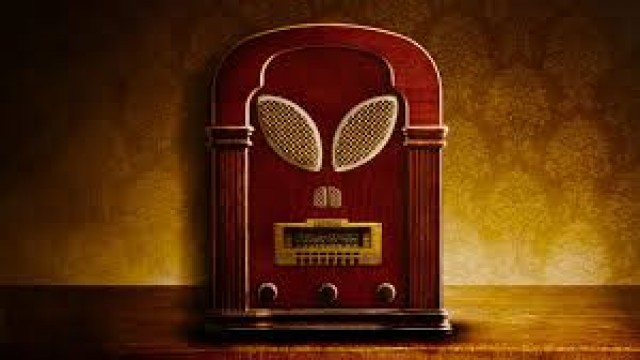
American Experience: War of the Worlds
American Experience: War of the Worlds

Where to Watch American Experience: War of the Worlds

American Experience: War of the Worlds is a documentary film that explores the cultural and historical impact of the legendary 1938 Orson Welles radio broadcast which sent America into a state of hysteria, believing Martians were attacking the earth. Masterfully produced by the award-winning PBS series "American Experience", the film takes viewers on an exploration of the event and its aftermath, providing fresh twists in exploring this timeless tale.
Orson Welles' adaptation of H.G. Wells' novel "The War of the Worlds" aired on the radio on Halloween Eve, 1938. Presented as an ordinary music show interrupted by realistic news bulletins describing the landing of Martians in New Jersey, the production caused widespread panic among listeners, many of whom mistook the fictional news bulletins for actual news.
This intriguing documentary serves as an eloquent commentary on the power of the media and its potential to manipulate the feelings and reactions of the public. It dives into the relation between the popular media and its audiences, the critical role of news and information interpretation, and how quickly and widely misinformation can spread.
The film offers a moment-by-moment account of the historic broadcast, with the focus on the behind-the-scenes work at Welles' Mercury Theatre and the resulting public reaction. It features footage from the archive, interviews with listeners who were persuaded the play was true, discussions with Welles’ collaborators from the legendary Mercury Theatre, and analysts who continue to study the broadcast's lasting impact. The film highlights the testament of the power of a single piece of media to trigger widespread panic, inadvertently laying bare profound and widespread anxieties prevalent in society.
The makers of the documentary use the notorious incident as a lens through which to examine the era's social and historical context. The film notes that the late 1930s were a time of considerable unease in the United States. With the Great Depression ongoing and Europe on the brink of another world war, fear and uncertainty had become constants in American life.
American Experience: War of the Worlds doesn't just center on the actual radio broadcast but also delves into its far-reaching implications. It charts how the incident was used to highlight the naivety and gullibility of the 'common' public, simultaneously serving as a warning against the power of mass media and its potential for manipulation. At the same time, it also elevated the reputation of Orson Welles, turning him into an international star.
What makes this documentary fascinating is its exploration of how fake news can ignite very real fear and panic, and it shines a light on the precarious balance between truth and fiction in the media. Though it is set in a specific historical period, the themes of the film are perennially relevant, since society continues to wrestle with similar issues of trust and credibility in media platforms.
American Experience: War of the Worlds is a well-researched, thoughtfully analyzed, and intriguingly told documentary. It stands as a reminder of a fascinating episode in media history while giving it wider application for viewers in any era. Beyond the story of an iconic radio broadcast, it provokes reflection on human susceptibility to misinformation, the capacity for mass hysteria, and widespread societal fears.
In conclusion, American Experience: War of the Worlds stands apart as a profound study of mass media, public persuasion, and the blurred line between fiction and reality. It serves as a gripping examination of a moment in time that shook America and permanently shifted broadcasting's landscape. Whether you’re a history buff, a student of culture and society, or simply have an interest in media's influence, this film will prove both enlightening and entertaining.