

69 Minutes of 86 Days
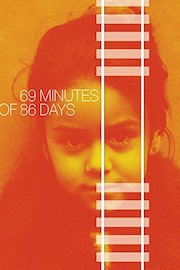
69 Minutes of 86 Days

Where to Watch 69 Minutes of 86 Days

69 Minutes of 86 Days is an intimate and profound documentary that provides a unique glimpse into the harrowing journey of a Syrian three-year-old girl named Lean, and her family as they undertake an extensive migration in an attempt to reach Europe. The film's title reflects its structure - it consists of 69 succinct minutes selected from 86 days of travel, which together formulate the narrative arc of the film.
The directorial debut of Egil Håskjold Larsen, this movie is an amalgamation of unique storytelling, cinematic experience and human bonds. When the film begins, we are introduced to Lean in a poorly lit passage somewhere in Greece. She is carrying her 'Frozen' princess school bag, her life packed in that tiny backpack, her innocence and determination juxtaposed with the gravity of the circumstances.
Without any dialogues, the film showcases the trials and tribulations of the family's journey. Proud, resilient, and determined, Lean's spirit uplifts the film beyond a hint of despair and depression. Just like her Disney princess backpack, Lean embodies an unlikely symbol of hope and strength amid such turmoil and distress.
Unequivocally, 69 Minutes of 86 Days does not shy away from revealing the harsh realities of the refugee experience, despite its focus on Lean. The film captures their constant displacement as they travel through Greece, Macedonia, and Serbia, on packed ferries, across vast fields, and inside bustling train stations. They sleep in makeshift arrangements, dial home from public phones, and receive food and clothes from relief centers. The grueling physicality of their journey is paired with the impending fear of an uncertain future that the adults try hard to mask from the children.
Larsen's distinctive filmmaking technique puts viewers directly into the milieu of the movie, lending it raw and genuine energy. Close-ups are minimal in this film, placing the characters within their context, against the backdrop of endless skies, boundless fields, long roads, muddy trails, and crowded camps. The camera often views the world from Lean’s low vantage point, reinforcing her child-like perspective and innocence.
The director also forgoes any narration, dialogue, talking heads, or other conventional storytelling devices. The silence becomes a canvas for universal emotions to be painted upon – the language of shared glances, body language, holding hands, and small gestures of comfort and solidarity. Lean's laughter, cries, playful moments with her toy, and interactions with her family speak louder than any dialogue ever could.
Throughout the journey, the viewers will come across moments of kindness and solidarity from strangers, hinting at the larger human connection that goes beyond borders and nationalities. As the family fights against exhaustion, harsh weather conditions, and bureaucratic hurdles, it is heartwarming to see how such abstract concepts as resilience, courage, and unity are solidified in the face of adversity.
This Norwegian film is more than just a documentary. It is an emotional journey that viewers partake in, observing the experiences of a little girl and her family in a capacity that is not intrusive but empathetic.
Contrary to many other films on similar topics, 69 Minutes of 86 Days ends on an unexpectedly hopeful note instead of hopeless despair. In this way, it breaks away from the traditional narrative of migrants and refugees, focusing on resilience and determination rather than suffering.
Musically, the film attempts to augment this feeling of hope through its minimal use of ambient sounds and occasional suspenseful music. With shots that look like photographs and the lack of non-diegetic sound, the film seems like a moving piece of visual art. Its careful choice of ambient sound successfully transposes viewers into the scene’s environment.
Overall, 69 Minutes of 86 Days encapsulates an ominous journey of hope, resilience, survival and childhood innocence through the eyes of a feisty three-year-old, Lean. The film's unique storytelling approach and evocative visuals give you a candid view into one of the most pressing humanitarian crises of our time. It is an exploration of human strength and the fight for a better life, bestowing upon the audience a renewed perspective on the refugee experience.