

10 Billion: What's on your Plate?
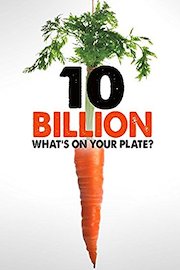
10 Billion: What's on your Plate?

Where to Watch 10 Billion: What's on your Plate?

10 Billion: What's on your Plate? is a thought-provoking documentary directed by Valentin Thurn, a prominent filmmaker known for his investigative and environmentally-focused documentaries. This movie, in particular, explores one of the most imperative issues our planet is currently facing - feeding a rapidly growing population in sustainable ways.
The film focuses on the daunting challenge of providing for an estimated global population of 10 billion people by 2050 and pinpoints the flaws in our current food system with a critical, yet empathetic eye. Thurn's curiosity doesn't just limit to identifying problems, but he also takes viewers on a transcontinental journey in search of alternatives and solutions.
The journey begins in Thurn's home country, Germany, before taking the audience across Europe, to Africa, Asia, and the Americas. Along the way, he interacts with farmers, agronomists, food scientists, and industry decision-makers, among others. Each encounter and discussion seeks to provide answers to the question the film poses, "What's on your plate?" - literally and metaphorically in terms of what choices we make, what we consume, and how these choices contribute to the global food dilemma.
Through engaging interviews and captivating footage of highly mechanized farms, organic agricultural practices, genetically modified organisms (GMOs), and urban farming initiatives, 10 Billion: What's on your Plate? offers a balanced view of the ongoing debate on how to feed the world.
In Europe, with the assistance of leading scientists and agricultural experts, we get an insider view into technologically advanced farming practices and GMOs. The film does not position these as a full solution, but as part of a range of options we have for tackling food scarcity. It also addresses the controversies and debates around these practices, reflecting upon potential risks involved and public apprehensions.
In Africa, the film investigates traditional farming practices that continue to feed large populations to this day. It highlights how these practices are often marginalized or dismissed by modern farming advocates while illustrating that each strategy can offer valuable lessons in sustainability and resilience.
Across Asia and the Americas, Thurn delves into urban farming initiatives, exploring how these cutting-edge practices are becoming critical in addressing food shortage issues in densely populated cities. He also meets innovators who are pushing boundaries with new technologies that might redefine what we perceive as 'farming' today.
Admittedly, 10 Billion: What's on your Plate? presents some complex and polarizing issues that the world grapples with today. Yet, Thurn’s unflinching dedication to revealing the intricacies of our global food system and our relationship to it makes it undeniably fascinating.
Thurn does not side with one particular worldview or solution but presents these varied perspectives to create awareness and advocacy. He encourages viewers to think about what they can do, how their food choices can contribute to positive changes.
At its heart, 10 Billion: What's on your Plate? promotes a more enlightened, connected, and sustainable relationship with food. Whether you're already passionate about sustainable farming, just becoming curious about where your meals come from, or you've never given it a thought, this is a documentary that will leave you questioning and hopefully, inspired.
In essence, 10 Billion: What's on your Plate? is a visually stunning documentary with a pertinent message that makes viewers ruminate on, 'What is the future of food?' Through careful investigation and consideration of varied perspectives, the movie implies that the answer to our impending food crisis isn't one uniform solution but will likely be a blend of the old traditions, new technologies, and a drastic shift in our consumption habits. It is, unquestionably, an urgent call for change and action to build a sustainable food system for our future.