

Slow TV: Train Ride Bergen to Oslo
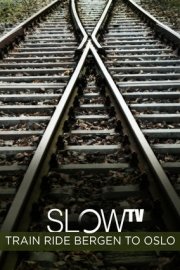
Slow TV: Train Ride Bergen to Oslo

Where to Watch Slow TV: Train Ride Bergen to Oslo

Slow TV: Train Ride Bergen to Oslo is a unique and innovative documentary-style film that invites viewers to experience a seven-hour, real-time journey on one of the most beautiful and captivating rail lines in the world: the Bergen Line that runs from Bergen to Oslo, Norway. Released in 2009, this film is part of the "Slow TV" series produced by Norwegian Broadcasting Corporation (NRK), a series which is entirely dedicated to long, uninterrupted broadcasts of ordinary events.
The Bergen Line itself boasts a historical significance. Operational since the late 19th century, it holds its place as Northern Europe’s highest elevated railway line. This illuminating seven-hour voyage brilliantly covers the over 300-mile long Bergen Line, and is a testament to Norway's stunning landscapes and the engineering marvel that is the Bergen Railway.
As the film begins at Bergen Railway Station, viewers are immediately absorbed into the incredibly tranquil atmosphere interspersed with the occasional murmur of passengers and the unique sounds of the railway. Early in the film, the train leaves the city of Bergen and proceeds into the breath-taking Scandinavian wilderness. The trip offers an ever-changing landscape throughout the journey, from the coastline near Bergen, through to the mountains and remote highlands, before finally approaching the Norwegian capital, Oslo.
Slow TV: Train Ride Bergen to Oslo subverts traditional filmic principles by having no plot, no characters, no drama, and no dialogue. It simply lets you experience the journey from the train driver’s perspective. The majority of the journey is shown from a camera mounted on the front of the train, providing an uninterrupted driver's-eye view of the tracks ahead and the striking Nordics landscape that unfolds along the way. Occasional low-key on-screen captions provide interesting information about the locations and history along the route, but for the most part, the emphasis is on the immersive and ambient journey itself.
Equally, it’s worth noting that this seven-hour journey is not purely a visual experience. The sound design, while subtle, is equally immersive; from the soothing sounds of the train on the tracks, to the gentle rhythm of the journey, to the muffled announcements heard at each station. This incorporates a further layer of authenticity to the experience, making viewers feel as though they are truly on board the train.
Being filmed in real time, the film does justice to the reality of an epic train journey. Rather than being punctuated by high-action sequences or dramatic events, there's a meditative quality to the viewing experience. There's an ebb and flow, a rhythmic transition of the train penetrating tunnels followed by the sudden exposure to expansive landscapes of serene snow-covered mountains, valleys, traditional Norweigan villages, and countless fjords. The film even includes night sequences, where all that can be seen is the mesmerizing spectral play of lights in the darkness.
The concept of 'Slow TV' is inherently innovative and has garnered international attention. However, Slow TV: Train Ride Bergen to Oslo, in particular, is renowned as the exemplary pioneer of this genre that gently forces you into a different rhythm of attention, revelation, and appreciation.
It's a film that defies expectations. It's as much a motion portrait of Norway as it is a radical rethinking of what television and film can be. For some, it’s about armchair traveling to a faraway land; for others, it’s a different form of meditation. For all, it’s a reminder of a different pace of life, one that most people no longer live at but can feel divinely luxurious to indulge in. It’s an opportunity to slow down, to appreciate the beauty of the journey and not just the destination.
In an era where everything seems to be accelerating, Slow TV: Train Ride Bergen to Oslo stands out as a bastion of calm and tranquillity, offering viewers an alternate lens through which they can perceive and appreciate the world.