
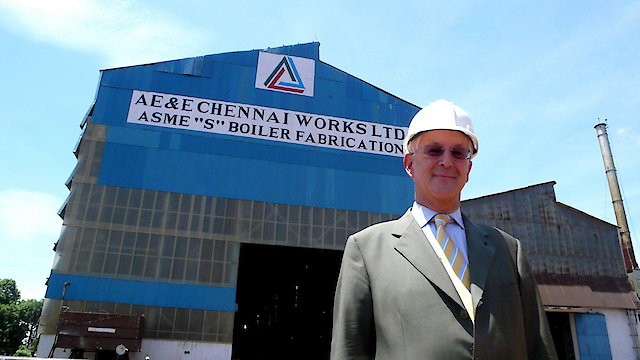
Let's Make Money
Let's Make Money
 7.4/10

Where to Watch Let's Make Money

Let's Make Money is an intriguing 2008 documentary directed by Austrian filmmaker, Erwin Wagenhofer. Notable appearances include industry experts and global financial influencers like Mark Mobius, Mirko Kovats, and K. Sujatha Raaju among many others. The documentary, which is a sequel to Wagenhofer's earlier work 'We Feed the World', aims to cast a spotlight on the world's financial systems and the unseen machinations of global capitalism that keeps the world's money in constant movement.
This documentary gets its hooks into viewers immediately with its provocative title, which encapsulates not just the ultimate goal of every investor, but the driving force behind the complex world of international finance. Let's Make Money does not aspire to be a tranquil walk through the woods. Instead, it takes viewers on a rapid, often dizzying ride with a single mission - to dissect the global economy, exposing its unsightly underbelly and bringing to light the forces that control the ebb and flow of money across borders.
The documentary draws on an impressive roster of interviewees, led by the likes of Mark Mobius, an emerging markets fund manager and a titan in global investment. Mirko Kovats, an Austrian investor who seized opportunities in Eastern European economies following the fall of the Iron Curtain, lends his perspective on post-communist financial systems. K. Sujatha Raaju, an advocate for Indian farmers, brings a grassroots voice to the narrative, providing a critical view on the sociopolitical impact of economic policies on marginal sections.
Wagenhofer leads his audience through the labyrinthine world of the global banking system, tax havens, and the underhanded methods by which the ultra-rich keep growing richer. By weaving together expert insight and hard-hitting visuals, Let's Make Money not only maps the route that money takes worldwide but also highlights the gross inequalities birthed and propagated by these processes.
In addition to the focus on intricate financial systems, the film also sheds light on how this skewed global financial landscape impacts everyday people, especially those in developing countries. Through case studies including India, Burkina Faso, and Mexico, the documentary delves into the inequalities and exploitation that result from Western corporations and their business practices.
The film takes special attention to detail in examining how predatory lending practices are devastating developing economies. The documentary scrutinizes the sharp increase in lending from developed nations to the peripheries as a major reason for the ballooning debt problems that many third world countries face today.
In addition, Let's Make Money critically explores the relationship between the opaque, wealthy world of tax havens and the poverty encountered in a multitude of developing nations, leaving viewers with the lingering question of how such injustice prevails.
Another pivot of the documentary is its bold critique of the deregulation of global markets. It presents examples of how this has led to rampant corruption, inappropriate distribution of wealth, and the resulting social inequality that is starkly visible today.
One of the brilliant aspects of Let's Make Money is its narrative structure, which doesn't merely focus on one side of the story. It seamlessly integrates a multitude of viewpoints, engaging in a balanced discussion about the prospects of capitalism. It allows us to listen to people from different walks of life, from financial experts untangling complex investment mechanisms to everyday people sharing stories of how capitalist economies have deeply shaped their lives.
Certainly, Let's Make Money is not an experience for the faint-hearted. It is a deep, unrelenting look into the brutal realities of global financial systems. Packed with cryptic illustrations, unsettling realities, and expert testimonies, it is a compelling watch for those who wish to understand how the world's wealth is truly managed, how it affects us directly or indirectly, and how it puts into perspective the financial disparity we face in this capitalist-dominated world.
In conclusion, Let's Make Money is an unflinching and lucid examination of the world's economic machinery. Through it, Wagenhofer opens a window into a world that many of us do not usually see; the world of high finance and its consequences for humanity. It is a thought-provoking documentary that challenges viewers to think about capitalism and global wealth distribution in a new light. It might not provide a panacea for all these maladies, but it offers a start – knowledge, in the hope that understanding might sow the seeds of positive change.
7.4/10