

Elementary Genocide: The School To Prison Pipeline
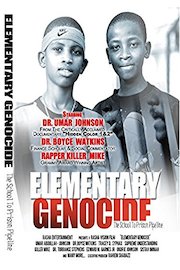
Elementary Genocide: The School To Prison Pipeline

Where to Watch Elementary Genocide: The School To Prison Pipeline

Elementary Genocide: The School to Prison Pipeline is a compelling and thought-provoking documentary that delves into the deep and heartbreaking realities of systemic injustices prevailing in the American school system. This fascinating documentary pulls the curtain back on unsettling truths and poses hard-hitting questions about the real function of the education system. It is a bold exploration of the unjust practices which perpetually marginalize a significant section of America’s youth and exposes how these very practices are intricately linked to mass incarceration in the USA.
The film’s title, Elementary Genocide, delivers a powerful inference to its content. By drawing a parallel between elementary education and a form of genocide, it uncovers a harsh reality that many are either unaware of or choose to ignore. The director, Raheem Shabazz, thoughtfully presents a profound critique of an education system that functions more as a breeding ground for the prison pipeline rather than an institution for nurturing and shaping receptive minds.
The documentary primarily targets the societal phenomenon commonly referred to as the "School to Prison Pipeline,” where the education system viciously feeds into the prison industrial complex. It reveals how institutional racism, harsh school policies, and societal pressures work collectively to alienate minority children, particularly African-Americans and Latinos, funneling them out of educational institutions and into the world of juvenile and criminal justice systems.
Elementary Genocide: The School to Prison Pipeline brings together a wide array of guest speakers who are leading figures in various fields such as the education industry, the legal system, sociology, and psychology, including Umar Johnson, Kalonji Changa, and Killer Mike. These guest speakers offer their insight and perspective, providing an in-depth exploration of the issue at hand. Their collective commentary and involvement add a depth of knowledge and personal touch to the film, giving the audience a full-bodied view of the issue. Their words underline the importance of addressing this crisis that is decimating communities and depriving countless children of their potential and their futures.
The film is far from being a grim narration of a systemic predicament. It effectively propounds solutions and urges viewers to take collective responsibility to bring about change. It focuses on the urgent need to rectify the educational environment, implement fair and non-discriminatory policies, provide youth with strong mentors, and create safe spaces conducive to learning.
In an effort to provide comprehensive and holistic coverage of the issue, Elementary Genocide: The School to Prison Pipeline includes a detailed exploration of the socio-economic factors and conditions that increase the susceptibility of certain demographics to this vicious cycle. It offers an unflinching look at the undeniable link between poverty, lack of access to quality education, systemic racism, and the growing prison population.
Indeed, Elementary Genocide: The School to Prison Pipeline is not a lighthearted, entertaining watch; instead, it’s an illuminating exposure of the harsh and disturbing reality for many children within the US. The documentary proficiently handles the distressing subject matter with sensitivity and sincerity and motivates viewers to become part of the solution, rather than remaining passive spectators.
This documentary drives home the message that the future of a community and, ultimately, a nation, lies in the hands of its youngest generations. Thus, it becomes critical to eliminate all factors that could possibly jeopardize their future and potential. It’s a cry for help and a call for action to break this toxic pipeline and redirect these children from a future behind bars to a life of possibilities.
Shabazz just doesn’t bring the unsettling realities to light but challenges us to take charge, to raise our voices, and to become active participants in transforming these systems. It prompts us to rethink our perspectives, policies, and practices, stirring a wide-ranging discussion about race, systemic injustice, and the way forward.
Elementary Genocide: The School to Prison Pipeline serves as an insightful examination into the functioning of the American education system. It's a must-watch for educators, policymakers, parents, and anyone interested in understanding and spreading awareness about the stark realities that continue to persist within this realm.
Remember, this documentary pertains to a grave subject that resounds with a straightforward but an essential message - our children are not disposables, they're our responsibility, our future. Evidently, it's high time we align our education practices to reflect this universal belief.