

Earthrise: The First Lunar Voyage
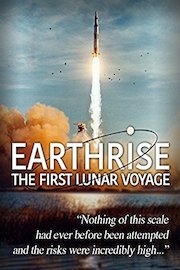
Earthrise: The First Lunar Voyage

Where to Watch Earthrise: The First Lunar Voyage

Earthrise: The First Lunar Voyage is a compelling documentary that captures the extraordinary journey of Apollo 8, the first manned mission to the moon. The film accounts for the historic voyage, from inception and planning through execution, and finally, the return to Earth. The film takes its title from the iconic photograph "Earthrise" captured by astronaut William Anders during that momentous flight, which presented our world as a small blue-and-white marble, rising above the lunar horizon.
The film's narrative is woven around the experiences of the astronauts themselves. The Mission Commander Frank Borman, Command Module Pilot James Lovell, and Lunar Module Pilot William Anders are all featured, each bringing a unique perspective on the event. The documentary engages viewers with detailed accounts of their preparation, personal sacrifices, fears, hopes, and moments of awe-inspiring beauty. It beautifully showcases the intense training the astronauts underwent, their personal motivations for partaking in such a risky journey, and the breathtaking spectacle they beheld whilst in orbit around Earth's only satellite, the Moon.
Earthrise: The First Lunar Voyage delves not only into the stories of these three astronauts but also the collective effort of NASA staff, engineers, and scientists whose dedicated work made the mission possible. It is also a tribute to the enormous strides in technology, engineering, and information science that were required to conceive, plan, and execute the mission, weaving in the larger canvas of the US-Soviet space race, a global fascination in space exploration and the tumultuous year of 1968. An event of this magnitude sprouted from enormous technological and logistical challenges; the film charts the methods used to overcome these, intertwined with the geopolitical and sociocultural contexts of the era.
Narrated with incredible detail and accuracy, with personal junctures and historical footnotes well-highlighted, the documentary elaborates the dynamics of the mission including the launch from Kennedy Space Center, the crucial trans-lunar injection, and the ever-important lunar orbit insertion. As the astronauts enter into the lunar orbit, viewers gain a new appreciation for our planet's delicate beauty set against the vast expanse of space.
In focusing on Earthrise, we should not forget the risky and dramatic journey back home. The narration adroitly known as "trans-Earth injection" involved a precise and perfectly timed engine burn. Even a slight miscalculation could have been disastrous, potentially stranding the astronauts in lunar orbit or on a trajectory that could have resulted in a fatal collision with Earth or the Moon. The nail-biting suspense of the crew's re-entry and eventual splashdown in the Pacific Ocean is portrayed in a manner that is both intensely riveting and emotionally gripping.
The film employs a vivid and immersive style, featuring a mix of archival footage, contemporary interviews, real audio transmissions, and computer graphics. The iconic Earthrise photo is often used as a centerpiece, symbolizing the unity and fragility of our shared world. Footage of the rocket launch, the nerve-wracking control room scenes, and visuals of endless space and the Moon's surface are beautifully integrated to provide the viewer an experiential feel.
One of the highlights of this documentary is its emphasis on the human elements. It does not merely celebrate the bravery of the astronauts and the genius of the legions behind them, but it also acknowledges the costs — both personal and societal. We get to witness the toll this rigorous journey took on the astronauts and their families.
Earthrise: The First Lunar Voyage is an immersive narrative that takes us back in time, acquainting us with the rigors and marvels of early space exploration. This is a documentary for not just space enthusiasts but also those who enjoy well-crafted historical narratives. It exemplifies humanity's boundless capacity for exploration, courage, and determination; a beacon of inspiration for future explorations and endeavors in space. The story of Apollo 8 is much more than a story of traveling to the moon; it is a tale of achieving what was once thought impossible. The film does an outstanding job of capturing the journey, leaving viewers with an enriched appreciation for human achievement and the indomitable spirit of exploration.