

Breeders: A Subclass of Women?
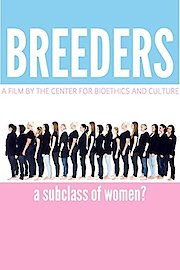
Breeders: A Subclass of Women?

Where to Watch Breeders: A Subclass of Women?

Breeders: A Subclass of Women? is a compelling 2014 documentary that puts a critical lens on the surrogacy industry. Directed by Matthew Eppinette and Jennifer Lahl, who's also the feature narrator, the film utilizes multiple perspectives to shine a light on the moral, legal, and ethical complexities of surrogate pregnancies, a topic that is not usually extensively explored in mainstream media.
“Breeders: A Subclass of Women?” isn't just a factual analysis; it's a distinct and personal investigation that aims to unpack ubiquitous narratives that surround the surrogacy industry. Jennifer Lahl, as the narrator, utilizes her background in bioethics to guide audiences through a multitude of stories representing different facets of surrogacies. The documentary endeavors to expose the often lesser-seen, non-glamorous side of surrogacy, drawing attention to the complex web of social, moral, and legal concerns surrounding this practice.
The film features personal narratives from a range of surrogate mothers, including tales of joy, heartbreak, and distress. These accounts are portrayed with a raw honesty that sheds light on the true repercussions and often challenging circumstances these women endure. This examination is not to vilify those seeking the help of surrogates but to draw attention to a system that is inherently complex and fraught with potential for exploitation.
Throughout the narrative of the documentary, Jennifer Lahl poses the fierce question: Are surrogate mothers just high-quality baby-making machines? Or are they careful and caring women who have chosen to lend their bodies for the joy of others? And at what cost to their own physical and emotional wellbeing?
Interwoven with the personal testimonies from surrogates are interviews with profound scholars and healthcare professionals explicitly selected to offer multidimensional perspectives on surrogacy practices. These experts discuss potential legal ramifications, ethical conundrums, and highlight the medical risks associated with surrogate pregnancies. They also share their apprehensions about the overall commercialization of childbearing and the potential for exploitation.
As the film progresses, it questions to what extent money plays a role in the decision to become a surrogate. It examines the commercial surrogacy industry globally, specifically in countries where regulations are inconsistently applied or entirely absent, leading to a preponderance of potential dilemmas.
"Breeders: A Subclass of Women?" is as much about voicing unheard stories as it is a critique of surrogacy. It is a film that subtly but firmly asks whether the "need" for a child should overpower the welfare and experience of the surrogate mother.
The documentary uses minimalistic cinematography that sets the stage for impactful storytelling. The simple camera setups leave space for the narrative to unfold naturally and surface raw emotions without distraction. The film lets audiences draw their conclusions and formulate their opinions, which adds to its inquisitive appeal.
The delicate topic of surrogacy comes with a myriad of deeply personal viewpoints. Lahl acknowledges that there are many wonderful stories that result from surrogacy; however, the film's focus is to understand better the unanticipated problems that can arise from it. It sheds light on the dark side of the surrogacy industry, thereby giving a voice to those who often get overlooked in the process.
"Breeders: A Subclass of Women?" challenges societal perceptions surrounding the practice of surrogacy. It effectively navigates the emotional journey of all involved, from intended parents to surrogate mothers, contrasting the narratives of joyous families with concerns about regulation, ethics, and welfare.
Thoroughly poignant and thought-provoking, the documentary stirs audiences to question a system so deeply influential to the fabric of life, giving them pause to consider the potential disparities between perception and reality in the surrogacy industry. It's a brave exploration that dares to question the norms and provides a balanced exposé on a subject often romanticized or overlooked in mainstream media.
Overall, "Breeders: A Subclass of Women?" is an essential viewing for those interested in women's rights, bioethics, parenthood, and the societal implications of transactional reproduction. This film truly forces viewers to think critically about surrogacy beyond the traditional adoption narrative.