

A Man Called Bee: Studying the Yanomamo
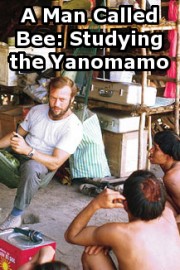
A Man Called Bee: Studying the Yanomamo

Where to Watch A Man Called Bee: Studying the Yanomamo

A Man Called Bee: Studying the Yanomamo is an illuminating 1974 documentary that presents a groundbreaking ethnographic study of the Yanomamo, a group of indigenous people residing in the Amazon rainforest of Brazil and Venezuela, regions largely untouched by modern civilization.
The film's title is derived from the work of noted American anthropologist Napoleon A. Chagnon, whose fieldwork in the 1960s amongst the Yanomamo, who affectionately named him ‘Bee’ due to his relentless work ethic. Directed by Timothy Asch and Chagnon himself, the action unfolds primarily through an observational lens, placing an emphasis on the daily routines, rituals, and interactions within Yanomamo society.
A Man Called Bee provides a richly detailed, evocative examination of the Yanomamo people. Chagnon's immersive approach provides viewers with a firsthand glimpse into Yanomamo community dynamics, offering insights into their customs, rituals, social organization, and economy. The film covers wide-ranging aspects of Yanomamo life, from food-gathering tasks to intricate rituals, such as the practice of endocannibalism, where ashes of the deceased are consumed by family members as part of mourning rituals. Such detailed ethnographic accounts humbly acknowledges the complexity and diversity of Yanomamo culture.
The documentary serves as an intimate portrait of Chagnon in his role as an ethnographer, highlighting the challenges and rewards of fieldwork in anthropology. The observational footage is complemented by Chagnon's reflections on the Yanomamo's inter-village politics, kinship system, and their fascinating animistic religious beliefs, which revolve around the spirit world. However, the film does not merely remain within the confines of scientific research; it brings into focus emotional associations and human connections developed over time between the anthropologist and the studied community.
Yet, A Man Called Bee is not devoid of criticism. It triggered discussions over invasive nature of field anthropology and raised several ethical concerns. Some detractors argue that the Yanomamo were depicted as 'primitive' or 'savage,' reinforcing damaging stereotypes. Contrarily, others underline the importance of the film as a landmark in visual anthropology by featuring the unfiltered, raw footage of traditional societies that were otherwise inaccessible for most of the global audience.
Overall, A Man Called Bee: Studying the Yanomamo represents a significant anthropological document. With its observational and reflexive style, the film effectively communicates the experience of fieldwork, revealing the practicalities and intricacies of 'doing' anthropology. The documentary is a vivid and intriguing insight into a unique and rapidly changing culture. Fully immersing itself in the microcosm of the Yanomamo society, the film offers a window into understanding the human experience from an anthropological perspective.
Curious viewers will no doubt be drawn in by the film's authentic, personal narrative and deep immersion within the Yanomamo community. As such, A Man Called Bee serves as both an enthralling ethnographic study and a poignant meditation on the increasingly blurred boundary between observer and observed in the realm of anthropology. This film is not only aimed at those with a scholarly interest in anthropology but also anyone drawn to the exploration of different cultural paradigms, human behavior, and societal norms.
A Man Called Bee: Studying the Yanomamo is a timeless piece of narrative and visuals that transcend the traditional format of documentaries. It's not just a film about an anthropologist doing his fieldwork; but it's also an invitation to viewers to step out of their comfort zones, question their preconceived ideas about 'primitive' cultures, and appreciate the diversity and complexity of human cultures. The film leaves lingering questions about the nature of science, the ethics of anthropology, and the complex dynamics between the observer and the observed.
This film has found resonance with not only academics and students but also with a broader audience interested in understanding human cultures and societies. Therefore, A Man Called Bee: Studying the Yanomamo is an essential watch for those who seek to engage deeply with anthropology's ethical, philosophical, and methodological debates, and those interested in broadening their insight into human cultural diversities and idiosyncrasies.