

A Gesar Bard's Tale
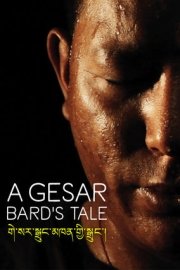
A Gesar Bard's Tale

Where to Watch A Gesar Bard's Tale

A Gesar Bard's Tale is an enthralling, richly layered documentary that intricately weaves narrative storytelling, colorful folklore, and intricate explorations of socio-cultural dynamics. This is a beautiful blend of various elements that bring together an opulent tale filled with heart, warmth, history, and a profound exploration of an ancient tradition.
Directed by Donagh Coleman and Lharigtso, A Gesar Bard's Tale tells the enchanting story of Dawa, a humble farmer who lives in the remote highlands of the eastern Tibetan Plateau, one of the most secluded regions in the world. Much like his companions, he lives a simplistic life, strongly rooted in the values and practices of his ancestors. Nonetheless, Dawa is not just an ordinary farmer. He also serves as an oracle through which King Gesar, a legendary hero revered across Tibet, Mongolia, and Central Asia, communicates.
As the movie unfolds, audiences get a feel for Dawa's dual existence – his dedication to simple farming routines and his transformative journey as a vehicle of a divine presence. Dawa speaks and sings as King Gesar in a trance state, narrating his heroic deeds. In the village's conventional setting, Dawa's role as a bard makes him a crucial community fixture - his performances a vital part of their cultural fabric, bestowing wisdom, guidance, and hope to his fellow villagers.
The film carries the audience on a journey documenting the unique tradition of epic storytelling, which UNESCO recognizes as part of humanity's cultural heritage. With Dawa as the protagonist, the filmmakers beautifully encapsulate the art of bardic storytelling that has been carried forth generation after generation. The bard's tale forms a congruous whole, brimming with rich folkloric detail, history, morality, and spirituality, blending an ordinary man's life with enchanting oral narratives.
A Gesar Bard's Tale is both an intimate portrait of Dawa's life and a sweeping exploration of a vast cultural phenomenon that transcends personal identity and touches on collective consciousness, belief, and faith. The film showcases the resilience and charm of ancient customs in the face of socio-cultural transformation and global modernity.
One of the splendid aspects of A Gesar Bard's Tale is its stunning visual language. Given the high-altitude, untouched natural landscapes where the narrative unfolds, the film is filled with breathtaking panoramas. The stunning shots of Dawa working on the fields, contrasting the humble simplicity of his home surroundings and the depth and expansiveness of his internal spiritual universe, convey the co-existence of mundane and divine elements. This visual dynamism transports the audience into Dawa's world, enabling immersion into the age-old traditions and environmental surroundings of remote Tibet.
Further, the film delves into personal accounts and aspects of Dawa's life, highlighting his relationships, hardships, trials, and tribulations that deepen the narrative's emotional undertones. Themes of belief, faith, courage, compassion, and resilience echo regularly as the story of Dawa, and the legendary Gesar unfolds. The devotion that Dawa commands within his community, the sincerity, and simplicity of his life, and the spiritual transformation that he undergoes during his performances capture the viewers, making them a part of Dawa's extraordinary journey.
Also, a notable feature of A Gesar Bard's Tale is its language. The richly textured Tibetan language further elaborates on the vast cultural heritage of the region. Subtitles provide not just translation but also context for audiences unfamiliar with the Tibetan cultural backdrop.
A Gesar Bard's Tale is a cultural collage, a profound exploration of a life caught between two planes of existence – the earthly and the divine. Its charm lies in its sincere portrayal of a humble individual who, through his unique inheritance of an age-old tradition, becomes a purveyor of faith and hope to his community and beyond. It illuminates an important aspect of Tibet's cultural heritage, providing audiences worldwide with a glimpse into an overarchingly beautiful yet vanishing traditional practice. It's a deeply evocative, visually sublime, and emotionally penetrating documentary that is both informative and transformative. The film is a testament to the endurance of cultural practices and the human spirit woven into an insightful story-telling experience.