

1040: Christianity in the New Asia
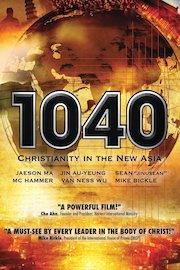
1040: Christianity in the New Asia
 8.6/10

Where to Watch 1040: Christianity in the New Asia

1040: Christianity in the New Asia is a 2010 documentary that explores the explosive growth of Christianity within the continent of Asia, with a particular focus on the geographical region referred to as the '10/40 Window'. This window, a term coined by Christian missionary strategist Luis Bush, is a region of the eastern hemisphere located between latitudes 10 and 40 degrees north of the equator, covering large swathes of the Middle East, North Africa until Eastern Asia. In this enlightening, educational, and thought-provoking exploration, filmmaker Evan Jackson Leong delivers an in-depth examination of the rapidly changing religious landscape in this part of the world.
The documentary boldly features hip-hop artist and thespian Jin Au-Yeung, better known as MC Jin, the first Asian-American rapper to be signed by a major record label. Jin embarks on a personal faith journey through Asia, serving as our guide for this enlightening and eye-opening journey. His passionate pursuit for understanding engages viewers, adding a personal and relatable touch to the overall narrative.
Along with Jin's journey, the documentary features interviews with leading figures, offering diverse and expert perspectives on the matter. Renowned Christian voices like Mike Bickle and Lou Engle delve deeply into the unparalleled religious expansion in Asia, primarily focusing on Christianity's rise. Mike Bickle, the leader of the International House of Prayer, offers his unique insights into the potential implications of this significant population shift.
Interestingly, the documentary also boasts the appearance of famous rap artist MC Hammer, who has been a public advocate of his Christian faith. His contribution to the conversation brings a fresh and interesting viewpoint from outside the more traditional clergy circle.
1040: Christianity in New Asia is not just about religious shifts; it's equally about cultural exchange, socio-political evolution, and personal introspection. With its geographical scope spanning China, South Korea, and Singapore, this film provides a platform for an untold story of Asia. In China, it explores the underground house church movement and the persecution faced by its followers. It then brings to light the dynamic mega-churches of South Korea and their evangelization efforts. The journey ends in Singapore, showing how this small but highly developed nation has become a significant hub for Christian missions.
In many ways, the film goes beyond a purely religious perspective and steps into the arena of social anthropology and history, shedding light on far-reaching themes of identity, tradition, globalization, and cultural interplay. Moreover, the cinematography brilliantly captures the authentic essence of the region, exploring both the urban complexity and rural simplicity of the Asian landscape.
The documentary provides an enlightened exploration into how Christianity's spread is intersecting with Asia's cultural, political, and economic transformations. It prompts thought-provoking questions on the impacts of this shift from both a regional and global perspective. How does this growth affect Christianity's traditional Western-centric paradigm? What are the societal implications for countries within the 10/40 window? And how does this expansion influence Asia's traditional religious ecosystems?
As much as it is a religious exploration, 1040: Christianity in the New Asia is also a study of the power of faith and the human spirit. It narrates stories of resilience and spiritual awakening in the face of adversity, remarkable stories of believers who strive to practice their faith despite the odds, and the transformative power of faith that drives social and personal change.
In summary, 1040: Christianity in the New Asia is a profound journey across spiritual, cultural, and geographical landscapes, set against the backdrop of Asia's rapidly evolving socio-political terrain. It's a must-watch for those interested in religious studies, Asian culture, and social anthropology. Whether you approach it from a religious, academic, or just a curious point of view, this documentary offers valuable insights into the realities, challenges, and future of Christianity in Asia. Its approach resonates with both believers and non-believers, offering a broader understanding of our interconnected global fabric. It is a testament to Asia's religious transformation, but also a reflection of its globally significant cultural evolution. The power of this documentary lies in its ability to provoke thought, invoke empathy, and promote tolerance and understanding.
8.6/10