

Tonite Let's All Make Love in London
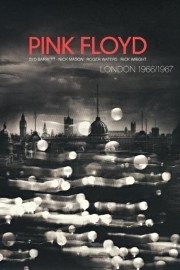
Tonite Let's All Make Love in London
 6.9/10
Where to Watch Tonite Let's All Make Love in London

Tonite Let's All Make Love in London is a British documentary film directed by Peter Whitehead, released in 1967. The film is a fascinating and evocative collage-style examination of London's counterculture scene during the swinging sixties. At its essence, the film works as a time capsule, capturing the moods, trends, and personalities that shaped a vibrant and transformative period in British cultural history.
The title of the documentary itself is indicative of the hedonistic and free-spirited attitudes that pervaded the era. At a runtime of roughly an hour and a half, the film takes the viewer on an immersive journey through various aspects of 1960s London - from its music scene to its changing social norms and everything in between. Through interviews, concert footage, and cinematic essays, Whitehead provides an unfiltered peek into the lives of young Londoners during a time of radical cultural shifts.
Unlike traditional narrative cinema, Tonite Let's All Make Love in London doesn't have a conventional, linear storyline. Instead, it employs a non-linear structure that favors atmospheric mood pieces, fragmented journalistic captures, and an avant-garde approach to storytelling. Whitehead embraces experimental techniques, and as such, the documentary plays out more like an impressionistic art piece than a straight-laced historical record.
Arguably, the most attractive draw of the film is its showcase of numerous music icons and influential figures. The documentary features interviews with, or footage of, key figures such as Mick Jagger, Michael Caine, David Hockney, and Julie Christie, among others. Commentary from these creative powerhouses provides insight into their personal experiences and artistic sensibilities during a time of great upheaval and innovation.
The film also hones in on the music of the era, highlighting the role it played in shaping the zeitgeist of 1960s London. Performances from seminal bands like Pink Floyd, who contribute to the film's soundtrack, help to convey the vibrancy and experimental nature of the music scene. In celebrating these performances, the documentary underscores how the music of the period not only defined a generation but also acted as a catalyst for broader social changes.
Moreover, Tonite Let's All Make Love in London is peppered with scenes capturing the fashions, galleries, clubs, and street riots, illustrating the multifaceted ways in which culture and politics intersected. The film was particularly attuned to the attitudes of the youth, their disillusionment with the establishment, and their desperation to articulate a new way of being in the post-war world. Their struggles, dreams, and challenges are laid bare for the viewer to experience.
The city itself becomes a character in its own right, with Whitehead's lens taking in the sights and sounds of various London locales. From bustling Carnaby Street to the serenity of the Thames at night, the film projects the city as the epicenter of a youth-driven cultural revolution. Furthermore, Whitehead explores the sexually liberated attitudes prevalent among London's youth, reflecting on the wider sexual revolution that provided new freedoms, but also generated pushback from more conservative segments of society.
Tonite Let's All Make Love in London’s editing style is as frenetic and unpredictable as the era it depicts. Rapid cuts, psychedelic imaging techniques, and ever-shifting visual motifs aim to disorient and engage the viewer, potentially evoking the sense of innovation and boundary-pushing that defined the sixties. On occasion, the film may even delve into surreal imagery, abstract montages, and poetic voiceovers to capture the ethos of psychedelia and artistic exploration.
One notable aspect of the documentary is its reflection on the fleeting nature of the very phenomena it documents. There is a consciousness of the ephemeral, of moments that burn brightly and then fade, much like the decade itself. It contemplates the idea of a cultural moment – its rise, impact, and inevitable decline or transformation – adding layers of resonance and poignancy to the film.
Tonite Let's All Make Love in London is not only important as a historical document but also as a stylistic work that helped to expand the language of documentary filmmaking during the 1960s. Peter Whitehead’s effort to encapsulate the spirit of a defining cultural moment is both admirable and intriguing. For historians, fans of music and art, and those interested in social movements, the film stands as a testament to a unique period of artistic risk-taking and social evolution.
While contemporary viewers might approach it as a piece of nostalgia, the film remains significant for its earnest attempt to grapple with a society in flux. Its raw energy, candidness, and cinematic flair make it an enduring piece of filmmaking that continues to offer insights and provoke conversations about an age that reshaped not just a city or a country but the world at large.
6.9/10