

The Western Story Lecture #8: Critics of the West: From Tacitus to Michael Moore
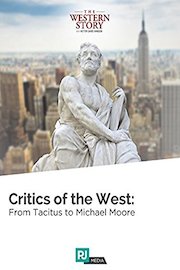
The Western Story Lecture #8: Critics of the West: From Tacitus to Michael Moore

Where to Watch The Western Story Lecture #8: Critics of the West: From Tacitus to Michael Moore

The Western Story Lecture #8: Critics of the West: From Tacitus to Michael Moore is an insightful exploration into the complex narratives surrounding Western civilization. Starring renowned historian Victor Davis Hanson, this lecture-style film examines the various critiques of Western culture, society, and values, tracing historical perspectives from ancient times to contemporary debates. Through Hanson’s compelling presentation, viewers are invited to consider the rich tapestry of thought regarding the West's accomplishments and failures.
Commencing with a historical overview, the film introduces the audience to the early critiques of Roman civilization articulated by the historian Tacitus. Tacitus, often recognized for his penetrating observations on the moral decay and political corruption of his time, serves as a foundational figure in the discourse surrounding Western criticism. Hanson deftly outlines how Tacitus’s apprehensions about the erosion of virtue and civic responsibility resonate through the ages, establishing a benchmark for subsequent thinkers who would engage with similar themes in varying contexts.
As the lecture progresses, Hanson transitions from these ancient critiques to the Enlightenment and the Romantic eras, highlighting how various intellectual movements reflected both admiration and skepticism of Western ideals. The film deftly illustrates how philosophers and writers of these times engaged in a dialogue on liberty, reason, and individualism, often juxtaposing the virtues of Western societies against their attendant vices. This juxtaposition becomes a recurring motif, as Hanson helps viewers understand how these foundational ideas have shaped contemporary perceptions of the West.
Throughout the film, the narrative unfolds with a careful examination of prominent critics throughout history—thinkers like Rousseau and Marx—who questioned the moral fabric of the West and its implications for governance and social structures. Hanson draws connections between past and present, inviting critical reflection on modern interpretations of progress and the costs associated with it. By spotlighting these voices, the film highlights the ongoing tension between celebration and criticism that characterizes the Western experience.
The contemporary era is not overlooked in this analysis. Victor Davis Hanson brings the discussion up to modern figures such as Michael Moore, whose provocative documentaries have stirred significant public discourse on the morality and ethical considerations of American life. The film examines how these contemporary critiques mirror age-old concerns while simultaneously addressing unique aspects of the 21st-century landscape. Viewers are encouraged to contemplate the impact of media, culture, and politics in shaping public opinion and attitudes toward the West.
Amidst this historical journey, Hanson emphasizes that the Western narrative is not one of linear progress but rather one filled with complexities, counterarguments, and opposing viewpoints. This multifaceted approach encourages audiences to think critically about their own views regarding Western civilization. The lecture-style format engages viewers as Hanson not only lays out historical facts but also weaves in personal anecdotes and reflective commentary, making the lecture both informative and relatable.
The film's visual composition complements Hanson's discourse, featuring picturesque imagery of significant historical sites, cultural artifacts, and contemporary landscapes that provide a backdrop for the ideas presented. This transcendent engagement of visual and narrative makes the subject matter more accessible and impactful, inviting viewers to see the tangible manifestations of the ideas discussed.
Moreover, the film doesn’t shy away from controversy. It acknowledges the legitimate grievances of critics while simultaneously asserting the importance of understanding the context and nuance behind their arguments. By doing so, the film stimulates a dialogue around the nature of criticism—what it means to critique a culture that has undeniably contributed to global advancements while also confronting moral and ethical dilemmas.
The Western Story Lecture #8 culminates in a thought-provoking invitation for viewers to reflect on their relationship with the West. Rather than dictating a singular narrative, Hanson encourages a multiplicity of perspectives and acknowledges the merits and shortcomings of Western civilization. This open-ended conclusion leaves audiences with lingering questions, prompting deeper introspection about cultural identity, morality, and the frameworks through which individuals view their own societies.
In essence, The Western Story Lecture #8: Critics of the West: From Tacitus to Michael Moore is a rich and stimulating experience that provides both a historical context and a contemporary framework for understanding the criticisms leveled against Western civilization. Through Victor Davis Hanson’s engaging storytelling and analytical prowess, the film stands as an essential resource for anyone interested in the profound complexities that underpin the discourse surrounding the West, all while underscoring the necessity for ongoing dialogue in an increasingly interconnected world. Through historical rigor and contemporary relevance, this lecture resonates with intellectual curiosity, making it a must-watch for audiences eager to explore the multifarious narratives of Western civilization.