

The Odyssey of Western Civilization Lecture #3: The Ancient Mediterranean
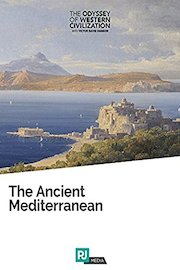
The Odyssey of Western Civilization Lecture #3: The Ancient Mediterranean

Where to Watch The Odyssey of Western Civilization Lecture #3: The Ancient Mediterranean

The Odyssey of Western Civilization Lecture #3: The Ancient Mediterranean is an enlightening and intellectually stimulating lecture presented by renowned historian Victor Davis Hanson. This film serves as the third installment in a series that aims to explore the historical underpinnings and cultural legacies that shape Western civilization. In this lecture, Hanson delves into the rich tapestry of the Ancient Mediterranean, examining the various civilizations that flourished in this critical region and how their interrelations influenced the broader narrative of Western history.
Set against the backdrop of the Mediterranean—an area synonymous with trade, cultural exchange, and conflict—Hanson's lecture introduces audiences to key civilizations such as the Greeks, Romans, and Phoenicians. Through a blend of narrative storytelling, visual imagery, and engaging rhetoric, he guides the audience on a journey through time, exploring how these societies emerged, developed, and eventually transformed.
One of the central themes of the lecture is the concept of "land and sea" and how these geographical elements shaped the civilizations of the Mediterranean Basin. Hanson provides insightful analysis into how the rugged coastlines and open seas facilitated trade and cultural exchange, while the interior regions fostered terrestrial power and conflict. The impact of geography is considered essential in understanding not only the interactions between these civilizations but also their individual developments and ideologies.
Hanson also discusses the innovations that arose during this time, including advancements in warfare, politics, philosophy, and art. He dives into notable events that exemplify these innovations, such as the democratic experiments of Athens, the military strategies employed by Spartan warriors, and the political machinations that characterized the Roman Republic. Each civilization's approach to governance, societal organization, and military prowess is scrutinized, allowing viewers to appreciate the dynamic interplay of ideas and practices that defined the Mediterranean world.
In addition to a historical overview, Hanson addresses the cultural impacts that stemmed from interactions between the Mediterranean civilizations. He explores how trade routes not only facilitated economic growth but also enabled the exchange of ideas, religion, and cultural practices. This cultural diffusion is presented as a fundamental element in the development of Western civilization, shaping beliefs, art forms, and even language in ways that would resonate throughout history.
While many lectures may focus on established narratives, Hanson invites viewers to question and reconsider widely accepted interpretations of historical events. He encourages a critical engagement with sources, emphasizing the necessity of viewing history through various lenses—be it social, economic, or military. This approach challenges audiences to think deeply about the complexity of historical processes and encourages them to draw connections between past and present.
Hanson’s powerful delivery and articulate exposition are complemented by visuals that illustrate key points, including maps, artifacts, and artistic representations from the era. These elements not only enhance comprehension but also invigorate the lecture, making the dense historical material accessible and engaging. The visual aids serve to anchor the discussion in tangible examples, drawing upon the rich archaeological discoveries that continue to inform our understanding of the Ancient Mediterranean.
Moreover, the lecture is imbued with Hanson's signature passion for history and insight into the human condition. His perspective frames historical figures not merely as agents of historical change but as individuals shaped by their circumstances, motivations, and aspirations. By humanizing historical narratives, Hanson fosters a connection between past and present, inviting viewers to reflect on how the legacies of these ancient civilizations continue to influence contemporary society.
As the lecture progresses, viewers are guided through a thought-provoking exploration that transcends mere historical recounting. The Ancient Mediterranean serves as a microcosm for themes of power, innovation, conflict, and cultural exchange that resonate throughout the epochs of Western civilization. Hanson’s examination of these themes not only enriches our understanding of historic civilizations but also underscores their relevance in the modern world.
In The Odyssey of Western Civilization Lecture #3: The Ancient Mediterranean, Victor Davis Hanson masterfully intertwines historical facts with philosophical musings, crafting an enlightening experience that enriches the viewer’s appreciation of Western heritage. Audiences leave with a deeper understanding of how the intertwining narratives of the Ancient Mediterranean civilizations continue to inform our present, shaping modern thought, governance, and cultural dynamics. This lecture is not only a celebration of history but a call to engage actively with the past as a means of understanding and navigating the complexities of the contemporary world.