
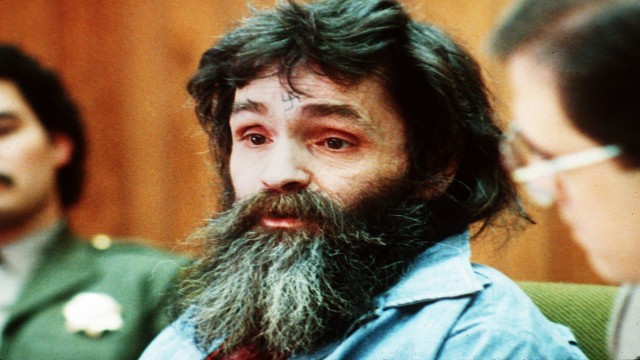
Manson: The Prison Tapes

Where to Watch Manson: The Prison Tapes

Manson: The Prison Tapes is a documentary that ventures deep into the life and psyche of one of America’s most infamous figures, Charles Manson. Utilizing interviews, archival footage, and audio recordings, the film offers a chilling look at the man who led his followers to commit heinous crimes in the late 1960s, an era marked by cultural upheaval and unrest. This documentary stands apart from traditional crime narratives, focusing less on the crimes themselves and more on the motivations and manipulative psyche of Manson.
The film begins by establishing Manson's background, exploring his troubled childhood and turbulent early life. Born into a life marred by instability, Manson's formative years are depicted as a crucible that shaped his worldview. This context is crucial, as it reveals the psychological underpinnings that may have contributed to his later actions. The audience is introduced to Manson not only as a criminal but as a complex individual who navigated a world that often pushed him to the fringes of society.
Through a series of recorded interviews conducted while Manson was incarcerated, the film captures his charismatic yet unsettling presence. Manson had an uncanny ability to attract followers, many of whom were lost souls seeking purpose and belonging during a time of radical change in America. The documentary delves into the dynamics of these relationships, shedding light on how Manson manipulated his followers, often referred to as the "Manson Family," into committing acts of violence on his behalf. Manson’s intricate language and persuasive speech patterns are analyzed, demonstrating how he employed charm, control, and psychological manipulation to exert influence over his disciples.
Manson: The Prison Tapes takes viewers on a journey through the societal backdrop of the 1960s, a period rife with counterculture movements, anti-establishment sentiments, and a widespread quest for identity among the youth. The film contextualizes Manson's rise to notoriety within this framework, examining how he tapped into the disillusionment of a generation. Manson’s creation of a cult-like environment is explored in detail, revealing the psychological complexities of devotion and fanaticism. As the film progresses, the audience is confronted with the stark contrast between the apparent peace and love idealized by the Summer of Love and the dark reality of Manson’s manipulations.
Interweaving his charismatic yet terrifying personality, the documentary features moments of profound insight, highlighting Manson’s ability to paint himself as a misunderstood visionary. He often articulated a vision of societal collapse, positioning himself as a prophet of doom while attracting followers with messages that blended elements of spirituality, freedom, and rebellion. The documentary scrutinizes these narratives, inviting viewers to consider how easily individuals can be swayed by persuasive rhetoric during times of upheaval.
The cinematography and sound editing in Manson: The Prison Tapes contribute significantly to its haunting ambiance. The combination of stark visuals, including black-and-white footage from the era, and the chilling audio recordings of Manson creates a palpable tension that permeates the film. This choice not only accentuates the gravity of Manson’s words but also emphasizes the surreal nature of his story, leaving the audience grappling with the duality of his character: the reviled criminal and the enigmatic leader.
As the narrative unfolds, it becomes increasingly evident that the documentary is not merely interested in Manson's misdeeds but aims to explore broader themes of manipulation, loyalty, and the human condition. Questions about personal responsibility and the power of influence emerge, prompting viewers to contemplate their own moral standings in the face of charismatic leadership. Through interviews with former followers, law enforcement, and experts in criminal psychology, the film delves into the implications of Manson’s actions on individuals and society at large.
Manson: The Prison Tapes stands as a reflective piece, encouraging viewers to engage with the complexity of Manson’s character and the consequences of blind allegiance. It avoids sensationalizing the violent aspects of his story, instead inviting an examination of the social and psychological factors that allowed such a figure to rise to power. The film challenges audiences to consider not only who Manson was but also how he managed to captivate and manipulate a vulnerable segment of society.
In delving into the darkness of Manson's world, the documentary ultimately serves as both a cautionary tale and a poignant exploration of the human psyche. It grapples with profound questions about the nature of evil and the dynamics of control, leaving viewers with lingering thoughts long after the credits roll. Manson: The Prison Tapes is a haunting examination of a troubled mind and the tragic results of unchecked charisma, providing a compelling narrative that resonates far beyond the confines of Manson's criminal legacy.
Manson: The Prison Tapes is a Documentary, Drama movie released in 2017. It has a runtime of 42 min. Critics and viewers have rated it no reviews, with an IMDb score of 0.0..