

John's Not Mad
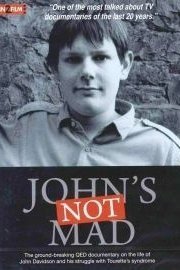
John's Not Mad

Where to Watch John's Not Mad

John's Not Mad is a powerful and thought-provoking British television documentary that was first broadcast in 1989. Produced by Q.E.D., a documentary strand of the British Broadcasting Corporation (BBC), the film dives into the life of John Davidson, a 15-year-old boy from Galashiels, Scotland, who is living with severe Tourette's Syndrome.
Tourette's syndrome, a neurological disorder, is characterized by repetitive involuntary movements and vocalizations known as tics, which can often be interpreted as strange or bizarre behaviour by those unaware of the disorder. The documentary navigates through the triumphs and trials of Davidson's life, painting a compassionate picture of his world for the audience. John's Not Mad showcases both the unfiltered reality and strength of spirit John displays while facing an often misunderstood condition.
The film begins at John's home, introducing us to his supportive family who tries to navigate the world as normally as possible, despite the daily challenges. The viewer gets an intimate glimpse into their close knit family life, showing how they cope with John's condition and the patience and understanding required on a daily basis. A great deal of the film focuses on his parents, displaying their worries and hopes for their son's future.
A significant portion of the documentary is dedicated to John's experiences at school. It documents school life from his perspective - the teen has a special chair in class to help suppress his compulsive movements, he spends some time in a special education classroom, and it's clear his teachers and classmates are trying their best to support him. However, the social isolation resulting from the misunderstandings and stigmas associated with his condition forms a looming backdrop.
The film does not shy away from depicting the harsh realities of living with Tourette's. It exposes the bullying John endures, the curious stares he draws, and the often uncomfortable interactions in public places. Indeed, John's Not Mad presents compelling evidence that it is not John who is 'mad,' but a society incapable of understanding or accepting his experiences.
The documentary methodically chips away at many misconceptions and prejudices related to Tourette’s Syndrome and mental illness. It explores how the media and public often portray individuals with Tourette's in a derogatory or demeaning fashion. It underscores John's normality and likability, making it clear that his external manifestations of his condition are only part of the larger picture of his life.
In the spirit of authenticity, the filmmakers decided not to edit out John's frequent tic-inspired outbursts, allowing audiences to get a real sense of what living with the syndrome is like. Despite the difficulties, John's fierce spirit is a constant presence in the film. His humor, his resilience, and his aspirations for a future where he can be understood and accepted are all passionately portrayed.
Another unique aspect of the film is that it offers sound-bites of medical experts explaining the syndrome at different points. These brief medical insights serve as a counterpoint to the daily scenes of John’s life, providing the viewers with a more rounded perspective of the disorder. This innovative approach further cements the documentary's commitment to educating the audience, not just through facts and figures, but through emotional engagement as well.
John’s Not Mad is rated by many as one of the most impactful documentaries of the 1980s. It received immense public attention due to its candid and empathic portrayal of John's experiences, which in turn broadened the public discussion on Tourette's Syndrome, leading to greater awareness and understanding of the disorder.
This documentary is not merely about a teenage boy battling Tourette’s. It’s a story about humanity, resilience, and compassion. It’s about a world that often chooses to ridicule what it does not understand. And by the end of the film, it leaves viewers with an essential understanding - that John isn't mad, the understatement serving as a powerful metaphor challenging societal perceptions of difference. It is a classic piece of television storytelling that will leave audiences moved, aware, and inspired to promote understanding in their own lives.