
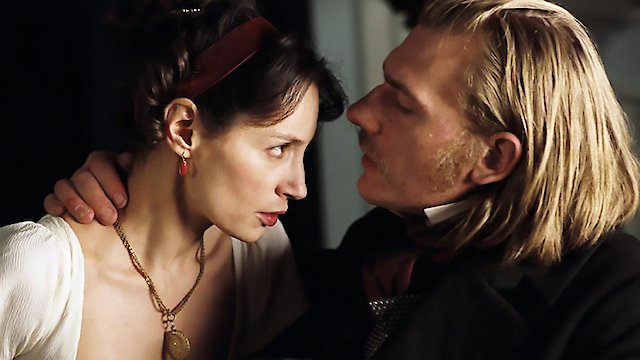
The Duchess of Langeais

The Duchess of Langeais
 6.5/10
 74/100
Where to Watch The Duchess of Langeais

The Duchess of Langeais is a 2007 drama film directed by Jacques Rivette, based on the novel “Don't Touch the Axe” by Honoré de Balzac. Jeanne Balibar, Guillaume Depardieu, and Bulle Ogier all skillfully embody their characters, contributing significantly to the thematic depth and romantic intensity which the narrative delivers.
Set in the glamorous yet restrictive French aristocracy of the 1820s, Balibar plays Antoinette de Langeais, the eponymous Duchess, whose character powerfully combines allure, grace, and underlying resilience. She is a married woman of high society, yet her husband remains conspicuously absent. Taking a step beyond the confines of her status, Antoinette singles out general Armand de Montriveau, portrayed by Guillaume Depardieu, as her potential lover. Montriveau, who is an honored military man recently returned from Africa, is intrigued and smitten by the Duchess, chasing the promise of a passionate love affair.
The storyline is a romantic entanglement with an enigmatic twist, capturing the complex societal conventions of the time. As a reflection of Balzac's novel, the film explores the deadly serious games of love, power and societal standing within the claustrophobically genteel realm of French upper-class society.
A key characteristic of this movie is the nuanced relationship between Antoinette and Armand. Their romance, imbued with covert flirtation and manipulation, uncompromisingly delves into the depths of passion and power. The film explores not only the politics of courting within the strict confines of societal expectation, but also the more profound aspects of love, such as emotional desperation and longing.
Jeanne Balibar shines as Duchess Antoinette, evoking an air of mystery and charm that captivates Armand from their very first encounter. Her delicately balanced portrayal of a hapless woman trapped by societal norms, yet determined to claim some form of autonomy, offers viewers a multifaceted image of feminine resilience. In contrast, Depardieu's portrayal of the renowned general is an image of masculinity marked by both strength and vulnerability, particularly in matters of the heart.
Rivette's directing focuses less on plot and more on the psychological tug of war between characters, as he exposes their desires, fears, and the games they play. The movie often plunges into intense dialogues exposing their mutual attraction and antagonism, creating a palpable tension that lingers even beyond the dialogue. The director’s preference for wordy exchanges and a slow pace structure serves as a pathway for the audience to delve deeper into the soul of each character.
Moreover, the film thrives on the artistic manipulation of mise-en-scène. The sumptuously detailed period clothing, lavish interiors, and tenderly handled artifacts convey a rich sense of location and era. The cinematography enhances the viewer's immersion, drawing attention to every detail, from the texture of fabrics to the flickering candlelight in Antoinette's salon. Even the artful use of off-screen sound, such as the ticking of an antique clock or the creaking of a wooden floor, contributes to an immersive environment that echoes the tension between characters.
In supporting roles, Bulle Ogier and Michel Piccoli add further depth to the social panorama and character dynamics within the film. Bulle's character, the Duchess's confidante, Princesse de Blamont-Chauvry, is a cautious observer of the unfolding drama, offering sage advice and timely warnings. Piccoli portrays Vidame de Pamiers, another member of the aristocracy whose precise role in the Duchess's life is intriguingly left implicit.
The essence of The Duchess of Langeais hinges on decoding hidden desires and unspoken words. As an adaptation of the Balzac novel, it reflects the complexity of human emotions, the struggle for power, and the consequences of societal constraints.
In conclusion, The Duchess of Langeais is an intriguing exploration of love, power, and societal norms set in post-Napoleonic France. The film's attention to detail, brilliant artistic direction, and emotionally complex performances make it a must-watch for fans of period dramas and romantic narratives.
6.5/1074/100