

Oporto of My Childhood
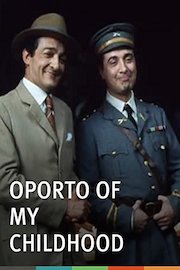
Oporto of My Childhood

Where to Watch Oporto of My Childhood

Oporto of My Childhood is a poignant, evocative, and deeply personal documentary film directed by Renowned Portuguese filmmaker Manoel de Oliveira. Released in the year 2001 when the filmmaker was at an impressive age of 92, this cinematic masterpiece presents a delicate blend of personal memoir, historical documentation, and ethereal narrative. The film primarily focuses on the city of Oporto (also known as Porto), the second-largest city in Portugal, and the director's birthplace. As such, the title is indicative of the main theme: a reminiscence of Oliveira's childhood in the city of Oporto.
The film is not traditional in the sense of a linear or chronological narrative. Instead, it unravels as an introspective exploration of memory, time, and place. It's Manoel de Oliveira's own vision of the city’s evolution throughout the 20th century, in terms of architecture, lifestyle, traditions, and culture. Not only is it a tribute to the city and its significant role in the director's life, but it is also an introspective journey into his artistic and personal development.
Oporto of My Childhood employs a creative style where both staged and archival footage are complemented by photographs and drawings, creating a unique collage-like representation of the past. This multimedia approach to storytelling nurtures a blend of the historical and the personal, producing a rich and dynamic perception of Oporto through the years. Artistic dramatizations of moments from the filmmaker's past are interspersed with factual documentations of the city's history, presenting a harmonious blend of the objective with the subjective.
The film's narrative is primarily visual; however, it is magnificently enhanced by the occasional yet powerful use of voice-over narration, personal reflections by Oliveira, and interviews with family members and local artists. These elements inject a fascinating layer of intimacy and insight into this visual memoir, making it a profoundly engaging viewing experience. The conversations with key characters in Oliveira's life add another layer of emotional depth, providing unique perspectives into the life of the acclaimed filmmaker and his connection to Oporto.
Oporto of My Childhood is marked by Oliveira's signature contemplative style, with lingering shots of urban landscapes, architectural marvels, and emotive portrayals of human emotions. His peculiar attention to details, capturing the essence of the Portuguese artistic and cultural heritage, gives this film its extraordinary visual charm. The cinematography embraces an almost poetic quality that consistently tugs at the strings of nostalgia, imbuing the movie with a pervasive sense of wistfulness.
The film caps off its fabulous narrative with a respective musical score. The classical and traditional Portuguese music infused throughout the film evokes an array of emotions, further enhancing the nostalgic undertone and depth of the narrative. The audio-visual harmony in Oporto of My Childhood is indeed one of its most striking elements, beautifully complementing its in-depth exploration of geographical and personal memory.
With Oporto of My Childhood, Manoel de Oliveira has painted a beautiful love letter to his city. At the same time, it is a reflective cinematic essay that unravels the delicate threads of his personal and artistic growth intertwined with the dramatic transformation of this city. It might be the viewer’s tour into the heart of the city of Oporto, but along the way, it never fails to provide glimpses into the soul of one of Portugal's most celebrated filmmakers.
Oporto of My Childhood is not to be watched in a hurry, and neither is it for those seeking an action-packed drama. This film is for lovers of art and introspective cinema. It is for those who appreciate the beauty in silence and slowing down to value the landscapes that have sculpted our lives. As such, this cinematic journey through time and memory manifest as a mesmerizing visual poem that truly is an ode to Oporto and a reflective testament of Manoel de Oliveira's affinity for the city of his childhood.