

Fish and Elephant
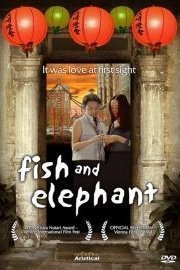
Fish and Elephant

Where to Watch Fish and Elephant

Set against the grind of modern-day Beijing, Fish and Elephant is an audacious venture into the realm of contemporary Chinese cinema, attempting to delicately navigate the subject matter of homosexuality - a topic often tiptoed around in traditional Chinese society. Shitou and Pan Yi lead you through the intricate socio-cultural maze where hiding one's true self becomes a matter of deeply ingrained pragmatism.
Aimed at opening up dialogues, the film strives to progressively break down the stigma surrounding homosexuality and illuminate the lives of those living in a society that rarely acknowledges their existence. The narrative is masterfully woven around the life of the central character named Xiao Qun, portrayed by Shitou, a vivacious woman in her late twenties working at an elephant house at a zoo in Beijing.
Xiao Qun's life makes for an intriguing storyline latched onto the ordinary, making peace with solitude amongst her elephant companions. This simplistic setup is suddenly disrupted as she balances the duty of caring for her traditional mother and managing a romantic relationship with her girlfriend, Xiao Ling portrayed by Pan Yi - a sprightly, freewheeling clothing vendor at a local market.
Director Li Yu brings the maze of Beijing streets to life, using the city as a formidable backdrop to the unfolding narrative. It’s a bustling, ever-changing living entity itself, underscoring the evolution, persisting traditionalism, and cultural complexities that come into play throughout the film. This dichotomy of old and new Beijing surprisingly mirrors the characters’ personal contradictions as they find their way through the labyrinth of societal norms.
Fish and Elephant lights up with the chemistry between Shitou and Pan Yi. At the heart of it, the film is a love story, exploring the connection between two individuals who are marginalized in their personal and social lives. Li Yu's fearless exploration delves beyond their sexual preferences, painting a full-bodied portrayal of their personalities, furthering the human aspect of the narrative. Their story's authenticity traverses beyond the societal judgments, providing a peek into their unseen world of aspirations, emotions, desires, and dilemmas.
The narrative takes a fascinating turn with the introduction of Qun's mother and her relentless quest to find a suitable husband for her unmarried daughter. The perspective of an older generation to the evolving concept of sexuality combines well with Qun's inner conflict of leading a double life, amplifying the depth of the film's backdrop - the clashing of old and new ideologies.
The film's title Fish and Elephant serves as a complex metaphor to the narrative. Fish, able to move freely, yet destined to stay submerged, is a mirror to the women whose lives are veiled underneath society's gaze. The elephant represents the enormity of their plight, a spectacle drawing public curiosity while maintaining an emotional connect with Qun.
Director Li Yu's brave storytelling is visible in her choice of non-professional actors, lending the narrative an added layer of realism. The realism weaved into the film is its true strength, it not only gives a raw, moving tale about lives and loves at society's margins, but it also dares to tell a story seldom narrated on Chinese screens.
Fish and Elephant captures the essence of a love-story often left untold, narrating an incandescent account of the trials and tribulations of a strained relationship amidst societal pressure and discrimination towards homosexuality. Blunt yet full of heart, this film explores the universality of love and life through beautifully captured scenes, intricate storytelling, and compelling performances.
The film invokes a subtle yet bold examination of same-sex relationships, diluting the taboo associated with it in mainstream Chinese society. Its endeavor lies not in raising the flag for radical activism but promoting understanding and acceptance.
Fish and Elephant, therefore, stands out in the panorama of modern Chinese cinema, not just for its artful storytelling and authentic performances by Shitou and Pan Yi, but also for the seeds of change it might sow in the minds of Chinese cinema-goers, concerning their perceptions of homosexuality and the silent dialogue it initiates about love, acceptance, and the different forms they take. This movie is a must-watch for those looking for a nuanced narrative breaking the cultural barriers of society subtly, while staying true to the universal theme of love and human relationships.