

Deuda
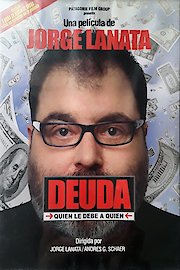
Deuda
"Who owes whom?"
 6.7/10
Where to Watch Deuda

Deuda is a poignant 2004 documentary that delineates the devastating impact of debt on the economy of a country, viewed through the lens of Argentina's financial collapse. The film offers a unique amalgam of an unforgettable history lesson and a crash course in economic reality that pulls no punches. It features influential figures, including but not restricted to, Domingo Cavallo, former Argentine Minister of Economy, previous U.S. President Bill Clinton, and renowned Argentine journalist Jorge Lanata.
This imperative investigation into the world of international finance and its implications for struggling economies is directed by Jorge Lanata and Andrés G. Schaer. The film deftly examines the complex cycle of foreign loans, the role of international financial institutions in this cycle, the country's inability to repay the colossal debt, and the inevitable socio-political fallout that ensues.
Deuda opens with the details of the economic crisis that unfolded in Argentina at the end of 2001, provoking the largest debt default in global history. It proceeds to explore and question the events and decisions that had led the country to this catastrophic phase. As viewers, we are introduced to a nation grappling with severe financial instability, potent political tensions, and widespread protests that were accompanied by violence on an unprecedented scale.
Domingo Cavallo, as part of the key ensemble of the documentary, provides a deep insight into the policy-making process of a country on the brink of economic collapse. He lays bare the challenging and often overwhelming complexities of guiding a nation's fiscal health in times of an unfolding crisis. He serves as both an informative guide and an involved participant in the economy's ebb and flow, which provides critical perspectives for viewers.
Former U.S. President Bill Clinton's participation offers viewers a valuable perspective on the role and influence of international relations and foreign aid in a nation's economic health. It offers a glance at the interconnectedness of the world economies and sheds light on the fact that the financial collapse in one country can potentially ripple across the globe.
The riveting narrative is effectively pieced together through Jorge Lanata's adept journalistic lens. Lanata, serving as the co-director and key narrator, enriches the documentary with his sharp acumen and penetrating analysis of events. His ability to put together a comprehensive socio-political landscape during Argentina's economic turmoil helps to draw viewers into the core of the crisis.
Throughout the film, the recurring theme of the crippling debt pervades the narrative - the same debt that crippled the nation's economy, leading to a chilling social crisis. Deuda digs deep into the question of how this could have happened, trying to piece together the puzzle of uncontrolled borrowing, ineffective economic policies, and the role of multilateral organizations such as the International Monetary Fund.
Deuda is an educational and sobering depiction of how the immense pressure of foreign debt can hobble a country's economy and unravel its social fabric. It exposes the underlying mechanisms of international finance, the complex interplay of factors leading to an economic crisis, and the devastating aftermath that follows.
This documentary is not just limited to the exploration of economic and political angles, but it also skillfully highlights the human element associated with this financial catastrophe. Through rich interviews and footage, viewers get a glimpse of the hardship, hope, desperation, and resilience of the Argentine people during this bleak period in the nation's history.
While Deuda significantly concentrates on Argentina's economic disintegration, it is also a powerful reminder of the potential risks and repercussions faced by other developing and heavily indebted countries. It creates a sobering reflection on the tragic cycle of debt that many countries find themselves entrapped in and raises questions about the existing global economic framework.
In summary, Deuda stands as an eye-opening expose filled with enlightening interviews, evocative accounts, and hard-hitting realities about the pitfalls of a crippling debt burden. It is a must-watch for anyone looking to gain a deeper understanding of the intricate web of international finance and the devastating impact it can impose on developing nations.
6.7/10