
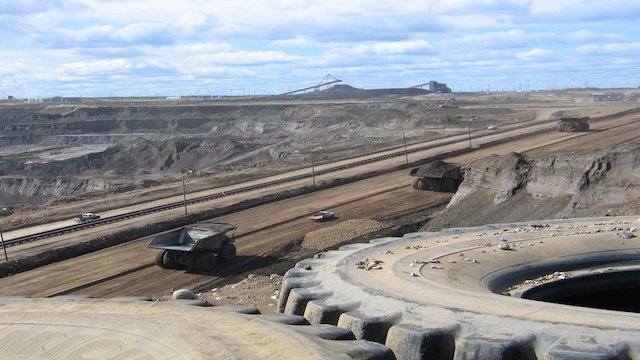
Crude Impact
Crude Impact
 7.6/10
Where to Watch Crude Impact

Crude Impact is a thought-provoking and potent documentary from 2006, directed by James Jandak Wood. It features stalwarts like Thom Hartmann, Richard Heinberg, and William Rees. This documentary captures the alarming issues of oil demand in our modern world, and its environmental, social, and economic impacts on the human race.
Wood’s gripping film takes us to a time when oil was first discovered, smoothly delineating the first ounce of oil's journey into our world. It speaks about how, with the dawn of the Industrial Age, the unprecedented power offered by oil made it a sought-after resource. Unwittingly, humanity began a destructive journey, which Wood aims to shed light on in his film.
The movie brings in social critic, author, and international lecturer Thom Hartmann in front of the camera. His extensive understanding of the world's socio-economic issues and themes coupled with the climate crisis brought about by oil misuse, brings depth to the film. Hartmann's powerful voice, alongside his convincing arguments, forces the viewers to grapple with their perceptions about the oil industry.
Joining Hartmann, is ecologist and environmental scientist William Rees, who effectively connects the over-dependence and exploitation of oil with environmental sustainability. His extensive analysis and research as the originator of the 'Ecological Footprint' adds a distinct flavor to the movie. Rees's discourse on sustainability, when juxtaposed against the harsh reality of oil dependence painted by the movie, adds a new degree of severity to the complex crisis facing our planet.
Meanwhile, Richard Heinberg, a senior fellow of the Post Carbon Institute and a leading expert on peak oil, provides viewers with a comprehensive understanding of the global oil scenario. Richard’s expertise in energy and economics goes in hand with the theme of the movie, and his discussions about the 'peak oil' theory provides an eerie and unsettling insight into the world's probably oil future.
Wood's directorial approach to Crude Impact is characterized by a combination of an attention-grabbing narrative, shockingly real facts, and interviews with insightful experts, making the film an authentic piece. The documentary succeeds in creating a deep level of engagement with its audiences through captivating narratives, rich with expert opinions and eye-opening facts.
And yet, the power of Crude Impact does not merely lie in its potent and frightening revelation about our dependence on oil. Instead, it extends to provide a critical analysis of the cultural, social, and economic implications of this dependence. It discusses how oil influences our daily lives and shapes our communities, geopolitics, environment, and economy. From explaining the rise and global dominance of multinational oil corporations to the plight of indigenous communities affected by oil consumption and production, Crude Impact explores an array of dimensions.
Furthermore, the film does not shy away from addressing the volatile politics that surround oil. It elaborates on political and military strategies aimed at controlling oil production, distribution, and consumption, throwing light on the uncomfortable reality of what's often termed as the 'oil wars.' From detailing the mechanisms of oil politics to unravelling the conflict and violence that corruption in the industry brings about, Wood’s film covers a broad spectrum.
Visually, the film is as striking as its content, with the cinematography skillfully echoing the tension and seriousness of the problems at hand. Dramatic aerial shots of oil fields, up-close images of oil spills, and attention-grabbing graphics provide a dramatic backdrop to the intense narration.
In the end, the film prompts the audiences to reflect on one dangerous question - What happens when the oil runs out? Crude Impact is more than just a movie. It is a visual conversation, a call for changes in attitudes, policies, and practices. It is an appeal for sustainable living, for a future where economies and societies don't run on the relentless pursuit of a resource that's running out faster than we can imagine.
A film like 'Crude Impact' does more than just inform or entertain. It shakes up its viewers, compelling them to reexamine and reevaluate their attitudes towards consumption, production, living, and existence. In its very essence, 'Crude Impact' is an eye-opener, a significant contribution towards the sustainable world movement.
7.6/10