

Built On Narrow Land
Built On Narrow Land

Where to Watch Built On Narrow Land

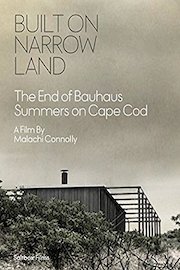
Built On Narrow Land is a thought-provoking documentary directed by Malachi Connolly and released in 2013. The film takes the viewer on an enlightening journey through a fascinating chapter of architectural history. It explores two of America’s most significant but least acclaimed architectural movements of the 20th century intertwined with a tale of social change within a captivating setting, Cape Cod, Massachusetts.
Set in between the exhilarating tension of World War II ending and the poignant reign of the Cold War launching, this 70-minute documentary focuses on the period from 1945 to 1970. During this time, Cape Cod faced an architectural revolution that culminated in the renowned "Cape Cod Modern House," a landmark that would soon denote the architectural aesthetic of the era. It was called the Bauhaus Movement, or sometimes casually referred to as the "Box".
The documentary tells the story of a group of forward-thinking designers and artists who chose the sandy, secluded lands of Cape Cod as the platform for their architectural experimentation. The location in itself was a metaphor, sandwiched between traditional New England architectural elements and the impending modernism. The Cape Cod’s quiet wilderness and uninterrupted oceanic views drew the eyes of architects, like Walter Gropius and Marcel Breuer, who further infused it with their astounding creativity.
However, Built On Narrow Land does not only focus on the architectural designs of the houses. The film also investigates the occupants, discussing the era's social and political contexts that transformed these homes into melting pots of intellect and creativity. Some of the occupants were European intellectuals who had fled Europe during World War II and wanted a place to brainstorm, debate, and innovate.
The documentary provides insight into the communities of Wellfleet and Truro in Cape Cod, revealing how they became the frontier of this novel architectural concept—the simplistic yet efficient modernist architecture. As the narrative unfolds, the film engages its audience in powerful dialogues about architectural lore, property rights, and the importance of preserving our cultural heritage.
Malachi Connolly, the director of the film, cleverly crosses the borders of a conventional documentary. Through beautifully shot footage and brilliant aerial views of these iconic houses, he brings the viewer close to the crisp, intuitive designs that made these shelters a la mode of the time. In addition, he combines historical photographs, firsthand accounts from occupants, interviews with architects, and commentary from historians to give a comprehensive view of the experiment that was unique to the Cape Cod peninsula.
However, the narrative of this architectural adventure takes a twist when the Cape Cod National Seashore is established to protect the natural beauty of the environment that, ironically, hosts these modernist houses. The law thus endangers these structures, risking the erasure of an important chapter in architectural history and questioning their survival amidst the ever-evolving legal, environmental, and political landscapes.
The film adopts a balanced perspective, showing both the celebration of the creative genius that birthed these structures, and the concurrent musing on whether preservation of historical artifacts should extend to modernist architecture, typically seen as different from traditional concepts of history and beauty.
In essence, Built On Narrow Land not only captures the eclectic spirit of modernist architecture but also opens up a discourse on the preservation of our modern cultural heritage. By revisiting the iconic architectural movement of Cape Cod, the film serves as an exploration of survival, a look at the intersection of art and society, and a tribute to architectural innovation. It poses challenging questions for its audience: What truly constitutes historical importance? And should buildings that once were harbingers of the future now be protected as relics of the past? Even if you're not an architecture enthusiast, the film's emotional depth, historical insight, and stunning visuals make it a worthwhile watch. It's as much about humanity’s quest to endure as it is about building and design.