

The Battleship Potemkin
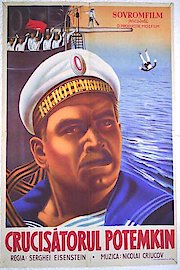
The Battleship Potemkin

Where to Watch The Battleship Potemkin

The Battleship Potemkin is a renowned 1925 silent film that forever changed the language of cinema by mastering the technique of montage editing. This soviet-era masterpiece, directed by Sergei M. Eisenstein, features notable performances from Aleksandr Antonov, Vladimir Barsky, and Grigori Aleksandrov. This film is not just a work of fiction but also holds substantial historical significance, as it depicts the 1905 Russian Revolution in a narrative that still stuns viewers with its emotional and visual power.
Aleksandr Antonov plays Vakulinchuk, the zealous sailor and leader of the uprising on the battleship Potemkin. His portrayal is a compelling blend of deep-seated agitation coupled with revolutionary fervor. Grigori Aleksandrov brings to life the role of Grigory, the intellectual voice on the ship who galvanizes the crew into defiance against their oppressive officers. Vladimir Barsky plays the implacable Commander Golikov, a man who thinks nothing of grinding down his men with brutality.
The film is divided into five distinct sequences of distinct events related to the revolt. The first part is named "Men and Maggots," where we are introduced to the harsh living conditions on the mighty Russian warship Potemkin. Deep in the belly of this ship, we find sailors who are given rotten meat infested with maggots and are expected to suppress their disgust and consume it. This scene is an illustration of the inhumane practices followed by those in power.
The second section, called "Drama on the Deck," sees a revolt break out on the battleship. This is a pivotal sequence, featuring meticulously orchestrated scenes that magnify the intensity of the revolt, leading to a clash between the oppressed and the suppressors.
In the third part, "A Dead Man Calls out for Justice," we see the fallen revolutionary hero Vakulinchuk on display in the seaport town of Odessa. The sailors hope to garner support against the monarchy, and Eisenstein effectively uses montage to extract raw emotion from the scene.
The penultimate sequence, "The Odessa Steps," is probably the most iconic and widely recognized in the film. It portrays a sequence of civilian protest on the large stone staircase in Odessa, which is brutally suppressed by the Tsarist soldiers. The tension of the scene mounts with the intercutting of diverse crowd shots and cold, robotic soldiers gunning down innocent civilians. Every frame laced with fear and brutality, yet underpinned by a bold sense of resistance.
The fifth and final chapter is "Rendezvous With a Squadron," in which Eisenstein raises cinematic tension dramatically in the story of the battleship's encounter with the remainder of the Russian fleet. His use of montage and collaborative symbolism culminates in a suspenseful and emotive finale.
The Battleship Potemkin has been hailed as one of history's greatest films, not least for the innovations it brought to cinematic storytelling. Eisenstein's use of the montage is momentous, creating tension and emotional connection by juxtaposing contrasting images rather than relying solely on narrative development. His masterful command of imagery, both subtle and overt, is used to drive home the stark political realities of the early 20th Century.
Sergei Eisenstein has artfully crafted a film that is as much about ideology as it is about human drama. It's a psychological and symbolic exploration of power, oppression, and revolution that continues to be deeply resonant. Soaked in politically charged themes, the overall narrative is a controversial and unforgettable exploration of the human spirit's ability to resist injustice.
The Battleship Potemkin is a vital piece of film history, an artform presenting not just dramatic but also political and social commentary. Although the film unfolds across a turbulent historical context over a century ago, its themes remain ever relevant to contemporary audiences. It continues to captivate with its emotional potency and careful mastering of film techniques, making for an undeniably essential viewing in the world of cinema.