
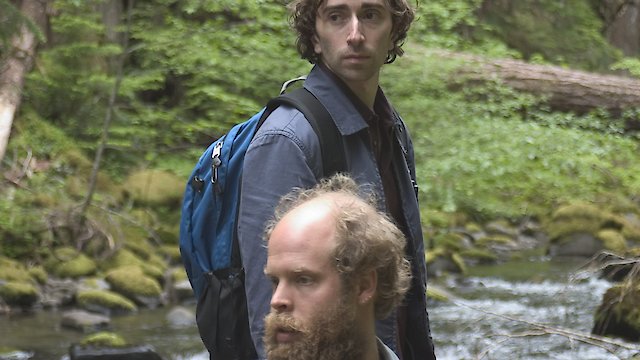
Old Joy
Old Joy
 6.8/10
 84/100
Where to Watch Old Joy

The film "Old Joy," directed by Kelly Reichardt and released in 2006, offers an introspecting view of friendship, melancholy, and the delicate line that intertwines joy and sadness. Known for its minimalist storytelling approach and quaint depiction of human interactions, the film stars Daniel London and Will Oldham in the lead roles, along with Tanya Smith in a supporting role.
The film introduces us to London's character, Mark, a soon-to-be father, leading a relatively content life in Oregon with his wife, played by Tanya Smith. His existence, though not completely fulfilling, is marked by quiet apprehension about his impending fatherhood and an undercurrent of yearning for some undefined escape. This rather mundane existence is disrupted by a call from an old friend, Kurt, portrayed by Will Oldham; a free spirit whose life is starkly contrasted with Mark's quiet domesticity.
Kurt, who appears to have remained untouched by the societal norms and responsibilities that Mark has adopted, proposes a camping trip. The film then seamlessly transitions into a road movie, treating the audience with vast shots of Pacific Northwestern wilderness as Mark and Kurt embark on their journey to Bagby Hot Springs. The road journey, subtly packed with allegorical concepts, forms the crux of the movie.
Upon its release, "Old Joy" received acclaim for its poignant depiction of male friendship and introspection. The film's minimalist dialogue and meditative pace serve as an invitation for viewers to scrutinize the subtle complexities of human emotions and relationships. This unspoken tension behind their friendship is brought to life by the nuanced performances of both London and Oldham.
Director Reichardt uses nature both as a backdrop and a metaphor throughout the film. The dense woods and hot springs seem to mirror the characters’ emotional landscapes, signifying escape, isolation, but at the same time, rebirth and recovery.
Yi-Yi's score, which is often more prominent than the dialogue, enhances the film's tone and mood. The subtle, ambient music complements the slow-paced narrative, contributing to the tranquil yet contemplative atmosphere of the film. The cinematography by Peter Sillen accentuates the serenity of the Pacific Northwestern landscape, paralleling the emotional undercurrents of Mark and Kurt's journey.
Despite its short run time (76 minutes), "Old Joy" manages to leave an indelible impression with its quiet representation of the passing of time and the evanescence of joy. The movie explores melancholia, not in an overarching sense, but rather as an inevitable part of being human, where joy and sadness cohabitate.
Furthermore, the film's political undertone cannot be ignored as the characters tune into Air America, a liberal radio station, during their drive. These snippets of radio discussions hint at Mark and Kurt's ideological differences and provide a macro-perspective of the socio-political landscape against which their personal journey unfolds.
The film's title, "Old Joy," is also quite telling – an overt reference to the former camaraderie between Mark and Kurt – an 'old' joy that they're attempting to resurrect amid their evolved personalities and lives.
Overall, "Old Joy" is a celebration of independent cinema, embodying the principles of 'less is more.' It takes us on a thoughtful, introspective journey of two old friends trying to reconnect and rekindle a lost friendship. The use of minimal dialogue, a soothing score and the slow, deliberate pace might not be every viewer's cup of tea. Still, for those who appreciate quiet meditation on time, nostalgia, and ever-evolving relationships, "Old Joy" could be a haven. Its picturesque storytelling will leave you pondering over the simplicity yet profound complexity wrapped up in human emotions and memory.
6.8/1084/100