
King Corn
King Corn
"You Are What You Eat."
 7.0/10
 70/100
Where to Watch King Corn

King Corn is a feature-length documentary directed by Aaron Woolf and starring Ian Cheney and Curt Ellis alongside a diverse supporting cast including Bob Bledsoe, Earl L. Butz, and Dawn Cheney. Filmed over the span of a year and released in 2007, this fundamentally educational yet exceptionally entertaining narrative manages to balance momentous issues related to farming, industry, diet, and health in the United States while maintaining an engaging human element through relatable characters and their personal relationships with corn farming.
The central narrative revolves around close friends Ian Cheney and Curt Ellis, who, after learning that their generation may be the first in U.S history to have a shorter lifespan than their parents due to unhealthy dietary practices, decide to explore this issue thoroughly. The film takes a biographical turn when the two friends discover through a laboratory study that their bodies are essentially made up of corn, piquing their interest in the overwhelming prevalence of this grain in our diets.
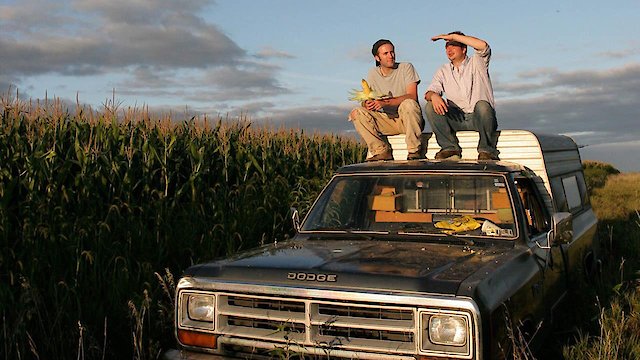
Motivated by their fascinating discovery, Cheney and Ellis move from the east coast to the heartland of Greene, Iowa, to grow an acre of corn and follow its journey through the food system. Their experiences form the backbone of the film, transforming it from a typical documentary into a kind of road-movie-cum-journalistic exploration, which combines personal elements with rigorous fact-play. Using a mix of agricultural history, on-ground reportage, scientific facts, and humor, the film explores commercial corn's role in modern America's disrupted ecological and health systems.
King Corn investigates the massive reliance of American agriculture on this single crop, which winds its way into everything from animal feed and corn syrup to ethanol fuel and fast food. The film also doesn’t shy away from discussing the controversial role of politics and policies in propagating such over-reliance. It takes a deep dive into the web of government subsidies, agribusiness, and genetically modified organisms, aided along the way by various interviews with the likes of Earl Butz, former Secretary of Agriculture, and other individuals linked with the corn industry.
Moreover, the journey of the duo from planting to harvesting, selling, and the ultimate fate of their corn crop is presented with authentic visuals and emotional warmth. They share their brushes with local farmers, and the intricacies of modern farming and monoculture, all the while unfolding America's propensity to produce "cheap food". The abstract notion of food production is practically broken down, with each subplot demonstrating how corn has become an unassailable pillar of American life, raising questions about the nation's agricultural policies, its unhealthy food habits, and its unsustainable farming methods.
Aside from the insightful journey into the heart of America's corn culture, King Corn shines as a human narrative, too. The film captures the daily lives and work of farmers and communities that rely on corn, their struggles, concerns, and connections with the land. Amid a wealth of facts, figures, and scientific data, the genuine human stories enable viewers to connect emotionally, thereby amplifying the impact of the documentary.
Shot elegantly, King Corn mesmerizes with its beautiful and contrasting sequences of the Iowan landscape, and the creators’ strategic use of animation adds an interesting, light-hearted touch. The directing is unobtrusive yet revealing, subtle enough to allow the subjects to tell their own story, yet skilled enough to maintain viewer interest throughout.
The movie makes a compelling argument regarding the far-reaching implications of excessive corn production, suggesting thought-provoking connections between agricultural policies, obesity crisis, and environmental problems. It’s easily one of the most enlightening agricultural documentaries, which nudges viewers to reconsider their relationship with food, government policy, and the environment.
In conclusion, King Corn is a compelling blend of scientific exploration, heartfelt storytelling, and vibrant cinematography. It’s a must-watch for those who strive to have a better understanding of what they consume, where it’s sourced from, and what its wide-scale impacts might be – all woven into a narrative that’s as relatable and absorbing as it is informative.
7.0/1070/100