

Killing Kasztner: The Jew Who Dealt With Nazis
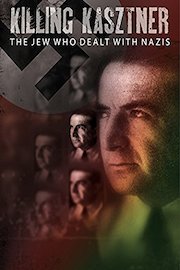
Killing Kasztner: The Jew Who Dealt With Nazis

Where to Watch Killing Kasztner: The Jew Who Dealt With Nazis

"Killing Kasztner: The Jew Who Dealt With Nazis" is a gripping, engrossing drama-documentary that unravels a complex, dramatic, and dark historical incident and its repercussions. This film serves as a mirror to the daunting conflicts, the ill-fated choices, the fiercely polarising demands of survival in a time of horrible degeneration and utter despair - the Holocaust and its aftermath. It delves into the life of Rezso Kasztner, played by Zsuzsi Kasztner, a controversial figure who made colossal sacrifices and unthinkable compromises during the most catastrophic period in human history.
At the core of the film is Kasztner, a Hungarian Jew, who tried to negotiate with the dehumanizing machinery of the Holocaust, the Nazis, during WWII to save thousands of lives. While some saw him as a hero, others branded him a traitor. The movie explores how the persona of Kasztner is more complex and nuanced than the black-and-white stereotypes of 'good' and 'evil.'
Zsuzsi Kasztner takes on the titular role with poise, delivering a powerful performance that brings out the depth and complexity of the character. She portrays Kasztner with compassion and fierceness, highlighting the extreme dilemma he was in and his desperate search for humanity in an inhuman world.
Merav Michaeli, in a pivotal role, complements her and adds another depth of understanding to the narrative. The nuanced dialogue, the potent silences, and the raw emotions she portrays lift the movie's mood, giving it an impactful and lasting impression.
The film unravels the controversial legacy of Kasztner, delving deep into his negotiations with senior SS officer Adolf Eichmann, trying to save as many Hungarian Jews from their impending doom as he could. The 'Kasztner train' that carried 1,684 Jews to safety is a famous footnote in the Holocaust's history. However, the so-called 'deal with the devil' caused severe controversy, and Kasztner faced accusations from the Jewish community of being a collaborator. His subsequent murder trial and assassination have become sensational chapters in Israeli history.
The movie intelligently threads the narrow path of revealing history without choosing sides. It presents the accusations, the heroisms, and the interpretations of various sides, leaving it to the spectators to draw their judgment. It does an excellent job of portraying the emotional cost every individual had to pay in an era where survival was the highest virtue, and moralities blurred in the face of harsh realities.
"Killing Kasztner: The Jew Who Dealt With Nazis" also documents the attempt of Kasztner's daughter, Zsuzsi, and journalist Merav Michaeli, to clear Kasztner's name, proving his acts were indeed of a hero trying to navigate through tough choices in the gruesome era of the Holocaust. The narrative juxtaposes the father-daughter relationships and the maturing of their understanding of the world’s ugliness in different times and situations.
Throughout the film, the viewers will be compelled to question - was Kasztner a traitor or a hero? Was he right in dealing with the Nazis? Was the deal just a desperate bid for survival or a tactical negotiation for saving as many lives as possible? The film does not provide clean-cut answers to these morally tricky questions. Instead, it draws the viewers into an engrossing, deeply moving exploration of the shadows and ambiguities of human nature when tested at its extreme limits.
Aside from the wonderful performances, the film also boasts a detailed and cohesive script, impressive cinematography that faithfully recreates the mid-century middle Europe and Israel, and a captivating score that accentuates the overall atmosphere.
In conclusion, "Killing Kasztner: The Jew Who Dealt With Nazis" is a haunting and profound depiction of a difficult chapter in history. It delves into the intensely personal, unraveling the human narrative behind the historical figures, and brings perchance an emotional closure to one of history's most divisive figures. This film is an absolute must-watch for audiences who appreciate deeply contemplative explorations of history, humanity, and dilemma.