
Homicidal
Homicidal
"A WORD OF WARNING! Please don't reveal the ending of this picture or your friends will kill you - IF THEY DON'T, I WILL!"
 6.8/10
Where to Watch Homicidal

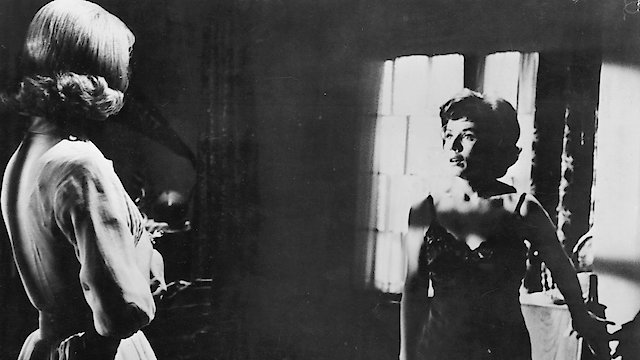
The 1961 film Homicidal is a chilling blend of suspense, horror, and mystery that encapsulates the essence of early 60s cinema. Directed by William Castle, the movie stars Glenn Corbett, Patricia Breslin and Eugenie Leontovich in a story that takes audiences on a heart-stopping journey through the darkness of the human psyche. Perfectly embodying the era, Homicidal's stark black-and-white cinematography offers a shining testament to the power of monochromatic storytelling, especially within the horror genre.
The plot revolves around a complex mystery unfolding in a small California community. Glenn Corbett takes on the role of the suave and well-intentioned hero, Karl, who finds himself unwittingly pulled into the eerie undercurrents swirling around him. Patricia Breslin portrays the soft-spoken yet keenly perceptive Miriam, whose role in the unraveling story is as enigmatic as it is integral.
As Karl and Miriam become enmeshed in a web of fear and suspicion, they must face an evil far greater than they could have anticipated. At the heart of this corruption is the brooding, peculiar Emily (played by a brilliant Jean Arless), whose disturbing behavior rattles the tranquil and simple life of the community. Emily's elderly wheelchair-bound employer, Helga (played by Eugenie Leontovich), also contributes to the mysterious goings-on, offering plenty of intrigue and suspense.
Homicidal stands apart for its daring approach to fear, blending classic tropes of horror with the psychological element that redefined the genre in the early 60s. The narrative keeps the viewer on the edge of their seat, constantly questioning the reality before their eyes. Castle effectively uses this uncertainty to fuel the tension and horror throughout the film, employing a variety of directorial techniques to keep the audiences guessing.
The cinematic framework not only places emphasis on the characters' overt performances but also delves deeply into their psyches, causing audiences to question their motivations and intentions. The chilling performance by Arless in her role as Emily steals the show as it brings out a deeply unsettling layer of darkness to the film’s atmosphere.
Moreover, Castle's expert use of assumption-defying plot twists and turns keeps the script dynamic. Even as viewers think they've pieced together the puzzle, Castle throws in a curveball that shatters any sense of complacency.
Homicidal bears many similarities to the iconic Alfred Hitchcock's horror classic released a year prior; namely, the idea of a small town disrupted by bewildering and evil events, the clash of innocents against a seemingly insurmountable and inexplicable foe, and the blurring lines between sanity and madness conveyed in captivating performances.
The film also integrates an innovative marketing trick characteristic of William Castle's style. Dubbed the “Fright Break,” the stunt offered audiences a chance to leave the cinema before the climax if they were too scared to see it, showcasing Castle’s showmanship embedded into his filmmaking techniques.
However, it must be highlighted that Homicidal, despite its similarities with other films, holds its ground as a unique piece of the horror genre in its time and remains a noteworthy contribution to the landscape of psychological thrillers.
In conclusion, Homicidal is a film that offers more than just thrills; it anchors itself firmly in the psychology of horror, engaging its audience not only through the ghostly events that transpire on screen but also the unsettling implications they cast on the human mind. From performances and script, to the haunting black-and-white cinematography and the film's daring subversion of classic horror, there's much to appreciate in this 1961 classic. Despite its age, the film's themes and the unsettling mood it creates make it worth watching for any fan of the horror or thriller genre.
6.8/10