
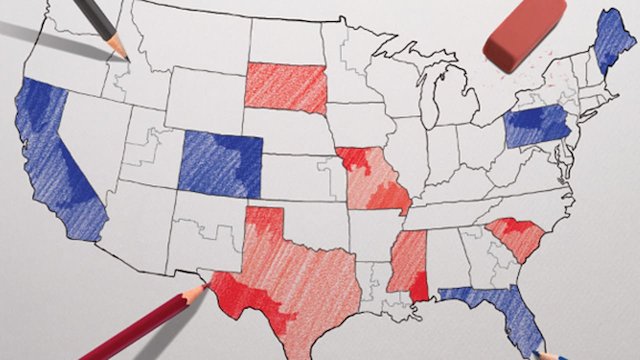
Gerrymandering
Gerrymandering
 7.0/10
 49/100
Where to Watch Gerrymandering

"Gerrymandering" is a captivating and informative documentary film that was released in 2010. The movie delves into the political process of redrawing district lines to benefit a particular party, a practice often referred to as gerrymandering. Directed by Jeff Reichert, "Gerrymandering" provides an in-depth analysis of the system, revealing how it often undermines democracy.
The movie features several key contributors to make its case, among them are Dave Aronberg, Ben Barnes, and Gray Davis. Together, they bring a wealth of knowledge and political background, helping the audience to understand the intricacies of a practice that is, often deliberately, shrouded in complexity.
Dave Aronberg, a Harvard-educated attorney and former Florida State senator, offers his viewpoint on the often-underhanded process of gerrymandering. He provides critical insights into the configuration of electoral maps and the political manipulation that sometimes ensues.
Ben Barnes, a former Lieutenant Governor of Texas, also features prominently in the film. A veteran of American politics, Barnes talks candidly about his own involvement in gerrymandering during his career. His expert knowledge and firsthand experience offer viewers a memorable and instructive perspective on the problematic practice.
Former Californian Governor Gray Davis also contributes to "Gerrymandering". Davis, who served two terms as governor, provides his unique understanding of the political landscape. His contribution is based on experienced governing and makes the documentary useful for understanding the nuances of electoral politics.
"Gerrymandering" begins by examining the history and definition of its titular process. By tracing the roots of gerrymandering back to the early days of the United States' democracy, the film portrays how entrenched this practice has become in American politics. Named after Massachusetts Governor Elbridge Gerry who signed a bill in 1812 to redrawn state senate election districts to the advantage of his party, this ancient practice is still prevalent today affecting the political landscape.
From this historical standpoint, the documentary expands to a contemporary context, detailing how gerrymandering is still employed in the modern-day. The movie analyses various cases across the United States, bringing in clear focus the implications and consequences of manipulating electoral boundaries. As a result, it offers viewers an understanding of the substantial impact this skewing of districts can have on voting results.
"Gerrymandering" shines a spotlight on the often-unseen machinations of the political process. Through engaging interviews and a clear, concise narrative, the film provides a snapshot of the fine line that separates strategic political maneuvering from manipulation and disregard of democratic principles. It is an exploration of the perversion of the political process, revealing how gerrymandering can potentially sway election results, destroy competition, and silence minority voices.
What makes "Gerrymandering" stand out is its unbiased approach. Although it deals with a subject that is deeply political, it remains non-partisan. Instead of picking sides, it emphasizes the detrimental impact that gerrymandering has on democracy, regardless of which party is applying it. Moreover, it is this objectivity that gives "Gerrymandering" its edge, making it an informative and essential documentary for anyone interested in the political science.
Throughout the film, the audience is led on a journey of revelation and reflection. On one hand, viewers learn about the various players in the game of gerrymandering, their strategies and tactics, and the wide scope within which they operate. On the other hand, the film fosters serious reflection about the inherent flaws in a system that permits such manipulation, inevitably pushing viewers towards desiring better fairness and transparency.
In all, "Gerrymandering" is a gripping exploration of a lesser-known corner of the political sphere. It is instructive, immersive, and compelling, bringing to light a phenomenon that often goes unnoticed but has profound implications for the American democratic process. Inviting anyone interested in current affairs, politics, or social justice, "Gerrymandering" is a must-watch, offering a profound examination of democracy's often obscured corners.
7.0/1049/100