
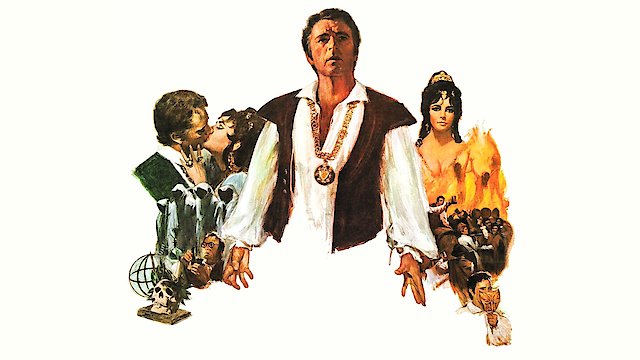
Doctor Faustus
Doctor Faustus
"The story of a scientist who sells his soul to the devil"
 5.4/10
Where to Watch Doctor Faustus

Doctor Faustus, released in 1967, is a cinematic adaptation of Christopher Marlowe's classic play, highlighting the timeless conflict between ambition, knowledge, and the moral implications of one's choices. The film stars Elizabeth Taylor and Richard Burton, two of the era's most revered actors, whose powerful performances elevate the narrative’s exploration of human desire and existential dread. Directed by the renowned American filmmaker, the film transitions the Renaissance tale into a striking visual and emotional experience.
Set in a medieval European backdrop, Doctor Faustus revolves around the character of Dr. Faustus, a brilliant scholar portrayed by Burton. He is depicted as a deeply conflicted man, disillusioned with the limitations of traditional learning and the constraints imposed by humanity's moral framework. A symbol of the intellectual striving of the Renaissance, Faustus is hungry for more—he desires not merely to understand the world but to wield its power and manipulate reality to his will. This insatiable thirst for knowledge and experience becomes his tragic flaw.
The film opens on a chilling atmosphere, with an eerie visual composition that foreshadows the dark themes to unfold. Faustus's profound dissatisfaction with the constraints of mortal knowledge sets the tone for the unfolding drama. He seeks to transcend the ordinary human experience and becomes entangled with forces beyond his understanding. In pursuit of ultimate wisdom, he makes a fateful pact with the devil — exchanging his soul for a limited period of supernatural abilities and knowledge. This is symbolized through the appearance of Mephistopheles, played with chilling charisma by Andreas Teuber. The character represents temptation and the insidious allure of power, embodying the darker aspects of ambition and desire.
As the narrative progresses, Faustus is granted immense powers that allow him to experience the world in exhilarating and transformative ways. His relationship with Mephistopheles becomes central to the story, revealing the complexities of their interactions. While initially intrigued by the allure of magic and knowledge, Faustus finds himself grappling with the consequences of his choices. The film’s dialogue echoes the philosophical reflections on the nature of humanity, morality, and the thirst for omnipotence, allowing viewers to ponder the ethical dimensions inherent in Faustus's pursuit.
Burton’s performance is particularly noteworthy as he navigates the turbulent emotional landscape of his character. He exudes an intensity that communicates both the brilliance and the tragic downfall of Dr. Faustus. His portrayal captures the nuances of a man torn between his desires and the increasing realization of the impending doom that results from his hubris. The duality of his character—his intellectual brilliance paired with his tragic flaw—makes him a compelling figure embodying humanity's conflict with itself.
Elizabeth Taylor’s role serves as a pivotal counterbalance to Burton’s Faustus. While not cast as a traditional leading role, her presence is felt profoundly throughout the film. She embodies elements of love, beauty, and the mortal joys that Faustus ultimately neglects in his pursuit of power. Taylor’s performance adds depth to the story, reflecting on the emotional cost of ambition and the intoxicating nature of love that sways Faustus from his pursuit of knowledge. Their dynamic captures a tension that is reflective of the broader themes present in the narrative, enriching the emotional texture of the film.
Visually, Doctor Faustus is stunning, utilizing striking set designs and inventive cinematography that enhances its darker themes. The film adopts a baroque style that mirrors the gravity of the narrative, with ominous shadows and rich colors that create a captivating yet foreboding atmosphere. Each frame is meticulously composed, reinforcing the tension between the magnificent and the grotesque, and accentuating the moral complexities of Faustus's journey. The art direction pays homage to the opulence of the Renaissance, while also invoking a sense of decay and despair that underscores Faustus's ultimate fate.
The film's musical score complements its dramatic elements, with haunting melodies that evoke a sense of longing and tragedy. The sound design works in tandem with the visuals to create an immersive experience, accentuating the emotional highs and lows that Faustus experiences throughout his journey. This orchestration serves to enhance the narrative, inviting viewers to reflect on the intellectual and spiritual dimensions of the story.
Ultimately, Doctor Faustus is a profound exploration of the consequences of human ambition and the pursuit of knowledge at any cost. The interplay between Faustus and the other characters, particularly Mephistopheles, serves as a commentary on the eternal struggle between light and darkness, knowledge and ignorance. Through its exceptional performances, striking visuals, and haunting themes, the film offers a poignant reflection on the nature of desire, the human condition, and the inexorable price of ambition—all woven into a timeless tale that resonates strongly even decades after its release.
5.4/10