
Caro diario
Caro diario
 7.2/10
 68/100
Where to Watch Caro diario

Caro diario, also known as Dear Diary, is a 1993 semi-autobiographical comedy drama film directed, written, and starred by the renowned Italian auteur, Nanni Moretti. The film earned Moretti the Best Director award at the 1994 Cannes Film Festival, a testament to the emotive storytelling, intriguing narrative, and distinctive film-making style presented throughout the movie.
Caro diario is a movie that masterfully blends elements of comedy, light-heartedness, introspection, and social critique. It rejects the conventional narrative in favor of an episodic, diary-like structure, cleverly fragmented into three distinct episodes: "On my Vespa," "Islands," and "Doctors.”
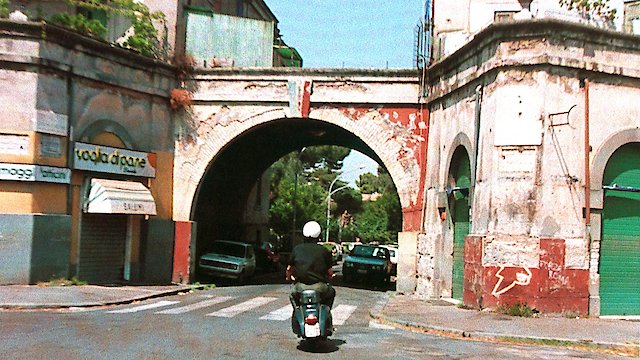
In the first section, "On my Vespa," we delve into Moretti's day-to-day life as he wanders through the streets of Rome, his native city. He explores different neighborhoods on his Vespa, offering insightful musings about various aspects of Italian culture, society, and his personal life. The section is well-known for the director's profound love for his city, depicted in an idyllic, summer-light-colored cinematography, and his keen observations of Italian life, unfolding in warm and humorous dialogue.
The film transitions to the second stage, "Islands," wherein Moretti vacations on the idyllic Aeolian Islands in the Tyrrhenian Sea. He’s accompanied by friend and intellectual, Gerardo (played by Renato Carpentieri), who insistently attempts to finish a book on the influence of television. Interactions here offer a comic look at the powerful role television has come to play in the contemporary world and how it can abstract, distract, and isolate us away from natural beauty and meaningful human connections.
The third section, "Doctors,” shifts tone to create a more serious discourse about medical industry, health, and wellbeing. Moretti portrays himself suffering from a skin condition — a malady which he seeks to cure. His journey through an array of doctors, dermatologists, and alternative health practitioners offers a satirical examination of Italian healthcare services. It’s however during this more serious and personal narrative, that the film embraces a raw and intimate examination of human vulnerability, anxiety, and fear in face of sickness and uncertainty of human life.
The film co-stars a number of other notable actors including Antonio Neiwiller and the gifted Renato Carpentieri, who contribute to the episodic narrative with their engaging performances. Throughout the movie, Moretti – also famously known as the Italian Woody Allen – often speaks directly into the camera, effectively breaking the fourth wall and inviting the viewers into the shared exploration of his city, his life, his thoughts, and his illnesses.
Caro diario is beautifully shot, with richly textured visuals and aesthetics that capture the romanticized scenery of Rome and the Aeolian Islands alongside confronting the stark sterility of hospital rooms. The innovative soundtrack, comprised of a mixture of rock classics and opera, gives an emotionally resonating musical backdrop to Moretti's personal odyssey.
The film perceives the world through Moretti's perspective, and thus, is smarter and quirkier than your typical comedy-drama. It’s an insightful, gentle, and often humorous look at life, society, and self, that employs Moretti’s sincere, non-conformist storytelling technique.
Caro diario is not just a film but an engaging invitation into the director's personal diary. It will captivate audiences who appreciate candid reflections on life and society. Despite its diversified, episodic format, the film carries a coherent emotional throughline, guided by the singular vision of Nanni Moretti. The result is an unconventionally endearing film that is simultaneously personal, profound, and infused with a quiet optimism for life.
In summary, Caro diario is an intelligently crafted cinematic memoir that perfectly utilizes wit, introspection, and satire to inspect society and ponder the complexities of life. Through this film, Moretti evokes not just empathy and inspiration, but also delivers subtle criticism of social norms, media, and medical practices, while celebrating the beauty of Rome and Italian culture. It’s a one-of-a-kind film that continues to be fundamentally relevant and relatable in contemporary times, firmly establishing Nanni Moretti as an iconic voice in Italian cinema.
7.2/1068/100