
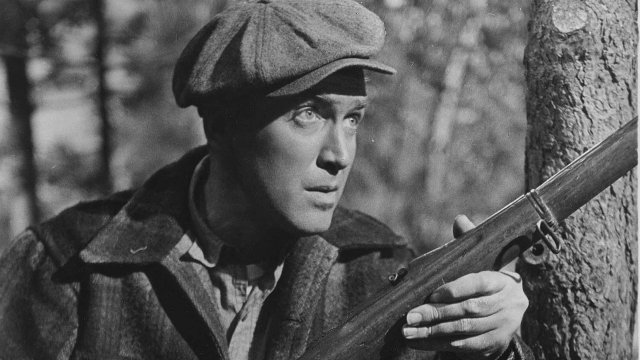
Carbine Williams
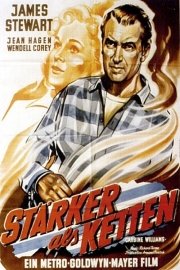
Carbine Williams
"This is my Story"
 6.9/10
Where to Watch Carbine Williams

Carbine Williams, an American biographical film from 1952, directed by Richard Thorpe, prominently features James Stewart in the lead role with other notable actors such as Jean Hagen and Wendell Corey constituting the main cast. The film dramatizes the life of David Marshall Williams, who overcame tremendous adversity to invent a semi-automatic firearm action used in the renowned M1 Carbine.
The movie, set in the early twentieth century rural North Carolina, begins by introducing us to "Marsh" Williams (played by the ever charismatic James Stewart). A clever, resourceful man with a knack for machinery, Marsh is also a notorious moonshiner, operating an illegal whiskey distillation business which entangles him in trouble with the law. This alongside his rebellious, hotheaded attitude creates a turbulent relationship with Captain H.T. Peoples (portrayed by Wendell Corey), a duty-bound law enforcement officer with fierce determination to maintain order.
The narrative evolves as Marsh's life takes a dramatic turn after a raid on his moonshine operation results in a gunfight, leaving a deputy dead. Arrested and charged with murder, Marsh finds himself in prison where his talents for machines and tools doesn’t go unnoticed. The warden places him in a workshop, hoping that Marsh will put his mechanical genius to productive use. His time in the workshop proves transformative on several fronts, it becomes a sanctuary where he contemplates his actions while honing his skills.
Detailed attention is given to the development of Jean Hagen's character, Maggie, Marsh's staunch, hardworking wife. Their relationship presents an emotional texture to the film and provides an intimate view into the personal struggles that Marsh grapples with behind the headlines and legal battles.
As the intense narrative unfolds, viewers are allowed glimpses of Marsh's inventive process and mechanical prowess. The film showcases the bitter fruits of his moonshining past and how he manages to channel his inventive spirit into creating the semi-automatic rifle. While the grim realities of prison life are not understated, the focus remains predominantly on Williams's inventiveness and his transformation.
The film's namesake 'Carbine' comes from the weapon Marsh develops – the M1 Carbine – which earned Marsh widespread recognition and made a significant impact during World War II. However, it's made clear that the film is not merely about the development of the weapon, but more importantly, the redemption and transformation of Marsh himself.
Carbine Williams presents a juxtaposition of the inherent dichotomies in humanity, showcasing how a flawed man can make a significant positive impact under the right circumstances. The character arc of Marsh Williams, skillfully portrayed by James Stewart, is heartfelt and inspiring — a testament to human resilience and the ability to transcend past misdeeds through creativity and innovation.
The cinematography is of the period, and the black and white film provides a visual authenticity that complements the dramatic storyline. Moreover, the supporting characters such as Peoples, who acts as a foil to Marsh, helping shape the complexity of Marsh's world, add depth to the overall narrative.
One of the shining aspects of Carbine Williams is the powerful performance by James Stewart, whose portrayal of the troubled protagonist is simply gripping. He captures Marsh's tormented soul, resilience, ingenuity, and redemption with an effortless display of acting prowess, making the narrative even more compelling. The sparkling chemistry between Stewart and Jean Hagen, who plays Maggie, Marsh's devoted wife, rings true throughout the film, winning audiences' hearts in the process.
In essence, Carbine Williams is an evocative glimpse into the life of a man who remakes himself amid daunting circumstances. It's a story of lawlessness, punishment, solitude, redemption, and innovation, all brilliantly brought to life by an impressive ensemble cast led by the inimitable James Stewart. Much more than a historical biopic, the film stands as a profound exploration of human resilience and the strength of the human spirit.
6.9/10